





Quick summary
This guide offers a clear, step-by-step walkthrough on how to add a user to Google Search Console and effectively manage user permissions. It explains the different access levels, owner types, and common issues you may encounter when granting access. You’ll learn how proper user management in GSC supports better SEO oversight, collaboration, and website performance.
Need help adding users to Google Search Console?
If you're just starting with Google Search Console or have been using it on your own but want to learn how to give someone access to your Google Search Console, this guide is for you. We offer a clear, step-by-step approach, with helpful images, for adding users to the Google Search Console (GSC).
We'll explain different user permissions, types of owners, and how to effectively manage your website's presence on Google.
Let’s get started!
User permission levels on Google Search Console
Google Search Console provides various permission levels for users, each granting different levels of access and control:
Owner
This user has top-level control in GSC. They can fully manage the website’s data and settings, including adding or removing users, changing their permissions, and tweaking the site's settings.
In GSC, there are two main types of owners, each with different roles and powers: Verified Owners and Delegated Owners.
Verified Owner
The verified owner proves they own the website by using a special code, like an HTML file or tag. They can also use all parts of the GSC account and add or take away other owners, including delegated ones. At least one verified owner is needed for anyone to use the property.
Delegated Owner
A verified owner gives a delegated owner their rights. They haven't proved ownership themselves but they can add users or other delegated owners. If their verified owner loses their status, the delegated owner loses access too. In the settings page, they appear as an owner but without any proof methods.
Additional users with owner-level permissions are classified as Delegated Owners. However, both are reported as simply "Owners" in the settings page. Every Search Console property must have at least one Verified Owner, who has completed the property verification process.
Full
Users with full permissions have access to all features and data in Google Search Console. They can view and modify all settings, including the ability to add and remove other users.
Restricted
Restricted users have limited access to specific features and data in Google Search Console. They can view performance data and some settings, but cannot make any changes or add/remove users.
Associate
Associates have specific, limited permissions. They can perform designated actions for a site and access particular data but cannot directly view or manage the GSC account. Their abilities vary based on their association type, such as managing related Chrome Web Store listings.
How to add users to Google Search Console
Step 1: Sign in to Google Search Console
Navigate to the Google Search Console website and log in with your account.
Step 2: Select your website
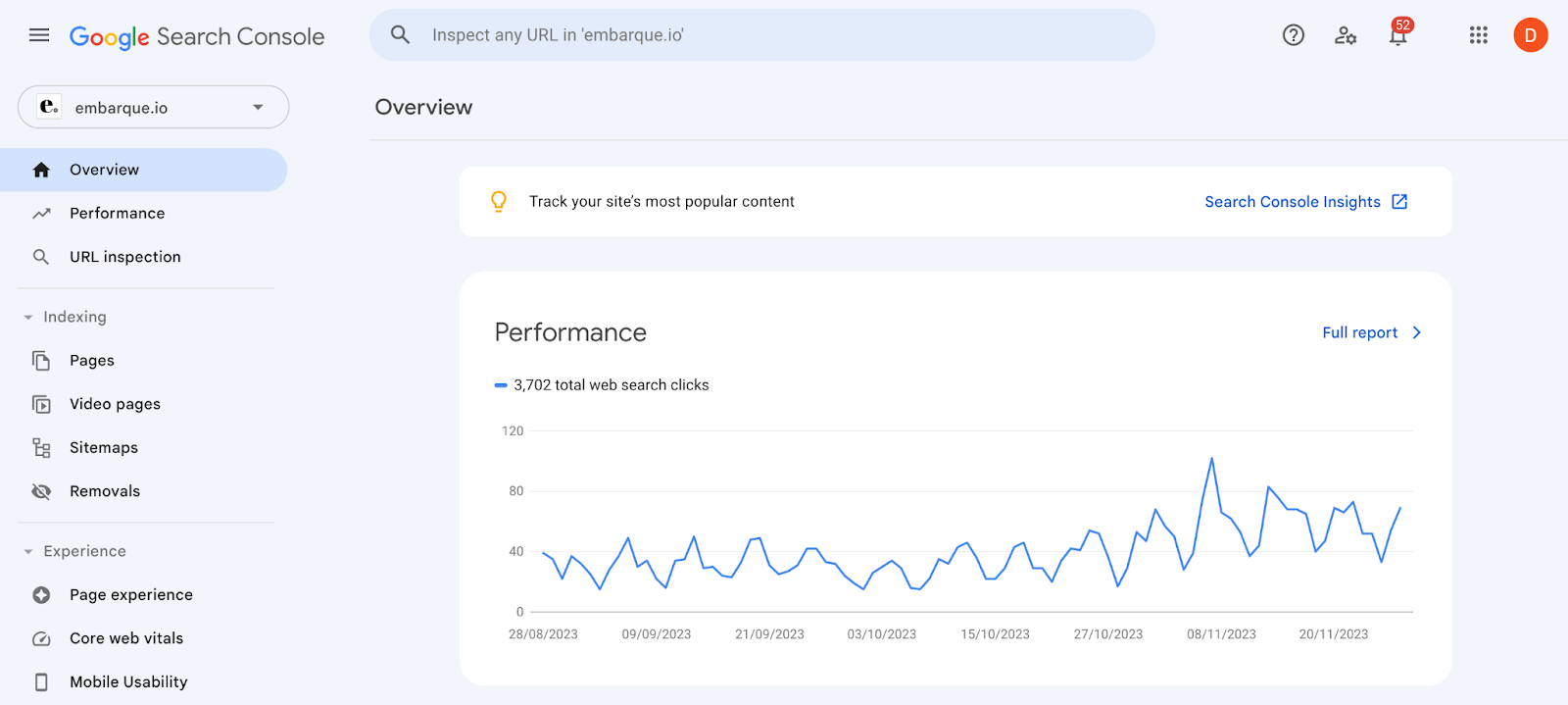
From the ‘Search property’ dropdown in the top left corner, choose the website you want to manage.

Step 3: Access settings
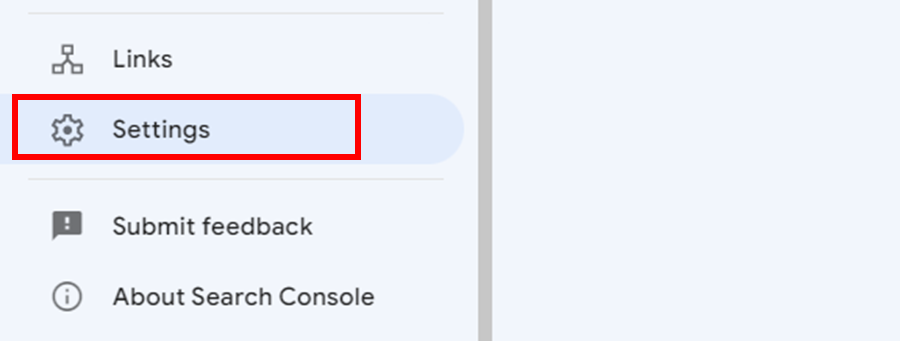
In the left panel, scroll down and click on ‘Settings’
Step 4: Go to ‘Users and permissions’
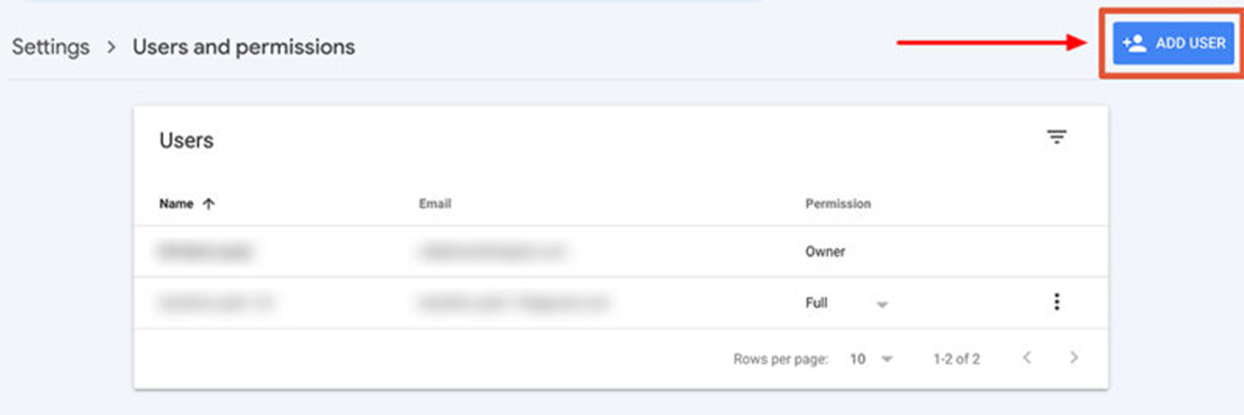
In the settings screen, select “Users and permissions”.

Step 5: Add a new user
Click on the ‘ADD USER’ button.
Step 6: Enter the user's email address and permission level
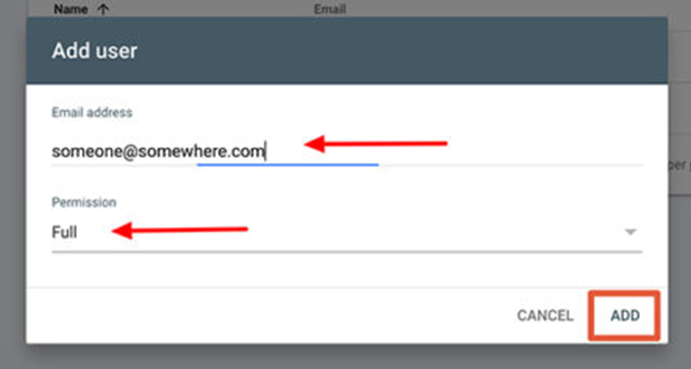
In the ‘Add user’ window, type in the email address of the user you want to add. Ensure this email is associated with a Google account. Select the desired permission level for the new user. Click on the ‘ADD’ button to finalize adding the new user.
Common issues when adding users to Google Search Console
User email not recognized
If the email address entered is not recognized, it means that it is not associated with a Google account. Please double-check the spelling of the email address and ensure that the user has a valid Google account. If the issue persists, try using a different email address for the user.
Permission denied error
This error can occur if the user already has access to the maximum number of properties, or if their access to certain features is restricted. Please check and adjust the user's permissions as needed.
Pending verification
If a user appears as ‘pending verification’ in your user list, it means they have not accepted the invitation to access your Google Search Console account. Please request the user to check their email and complete the verification process.
Permission level restrictions
Make sure you have the necessary permission level to add users to your Google Search Console account. Remember, only owners and full users can grant access to others, while restricted users do not have this capability.
User not receiving invitation
If a user does not receive the invitation email, they should check their spam or junk folder. Also, please confirm the accuracy of the provided email address and ensure that it has not blocked emails from Google.
User unable to access account
If a user is unable to access your Google Search Console account after accepting the invitation, verify that they are signed in with the correct Google account. They might need to switch accounts or clear their browser cache and cookies.
Learn Google Search Console with Embarque
Adding users to Google Search Console is a breeze, just be sure to follow the instructions mentioned above diligently. Don't forget to explore reviews and experiences on common issues and troubleshooting for further insights.
This Embarque guide is just one of many valuable resources we offer. Discover more Google Search Console guides here!
Need tailored SEO help? If you work in healthcare, check out the best medical SEO companies we recommend for expert, niche-focused support.
Frequently Asked Questions
How do I add a user to Google Search Console if I am not the owner?
You cannot add users unless you have owner or full user access to the property. Restricted users can view data, but do not have permission to manage users or settings. If you need access, request an upgrade from the property owner.
How long does it take for access to activate?
User access is activated immediately once the invited user accepts the email invitation. There is no waiting or review period, and the new user can begin accessing data right away based on the permission level granted.
Can I grant someone temporary access to Google Search Console?
Yes. Google Search Console does not offer time-limited access by default, but you can manually remove a user at any time through the Users and permissions section. This makes it easy to grant short-term access to contractors, consultants, or auditors.
What permission level should I give an SEO agency?
In most cases, full user access is sufficient for an SEO agency. This allows them to view performance data, submit sitemaps, inspect URLs, and analyze issues without controlling ownership settings. Owner access should only be granted if the agency needs to manage property-level configurations.
Can multiple users manage the same property?
Yes. Google Search Console supports multiple users on the same property, each with different permission levels. This is useful for teams that include SEO specialists, developers, content managers, and stakeholders who require varying levels of access.
Is it safe to add developers to Google Search Console?
Yes, as long as the appropriate permission level is assigned. Developers typically need restricted or full access to diagnose indexing issues, Core Web Vitals, or crawl errors. Owner access should be limited to trusted individuals responsible for overall property management.
Why can’t I see the Add User button?
If the Add user option is missing, you likely do not have sufficient permissions. Only users with owner or full user access can add or remove users. Check your permission level under the Users and permissions panel or contact the property owner.
Does adding users affect SEO performance?
Adding users does not directly impact rankings or indexing. However, proper access improves collaboration, speeds up issue resolution, and ensures SEO, content, and technical teams can act quickly on insights, leading to better long-term SEO performance.