








Quick Summary
This guide covers 7 areas of furniture store SEO: keyword strategy, on-page optimization, local SEO, technical fixes, content, AI search, and link building. Every section focused on helping you get discovered in search and convert more shoppers into customers.
Struggling to Get Your Furniture Store Found?
Furniture shoppers do not walk into your store cold. They search first. By the time someone walks through your door, they have already scrolled through three websites and shortlisted their options.
That is the window SEO gives you: the ability to be one of those three websites.
Furniture retail is one of the most competitive verticals in local and ecommerce search. You’re not just competing with the store down the road. You are up against Wayfair, IKEA, Pottery Barn, and hundreds of national brands with enormous domain authority and deep content budgets.
In this Embarque guide, we'll discuss how furniture stores can compete and win in search, from building the right keyword strategy to ranking in AI-generated answers. We’ll also explain how to fix technical issues and earn backlinks that actually move the needle.
Why Listen to Us
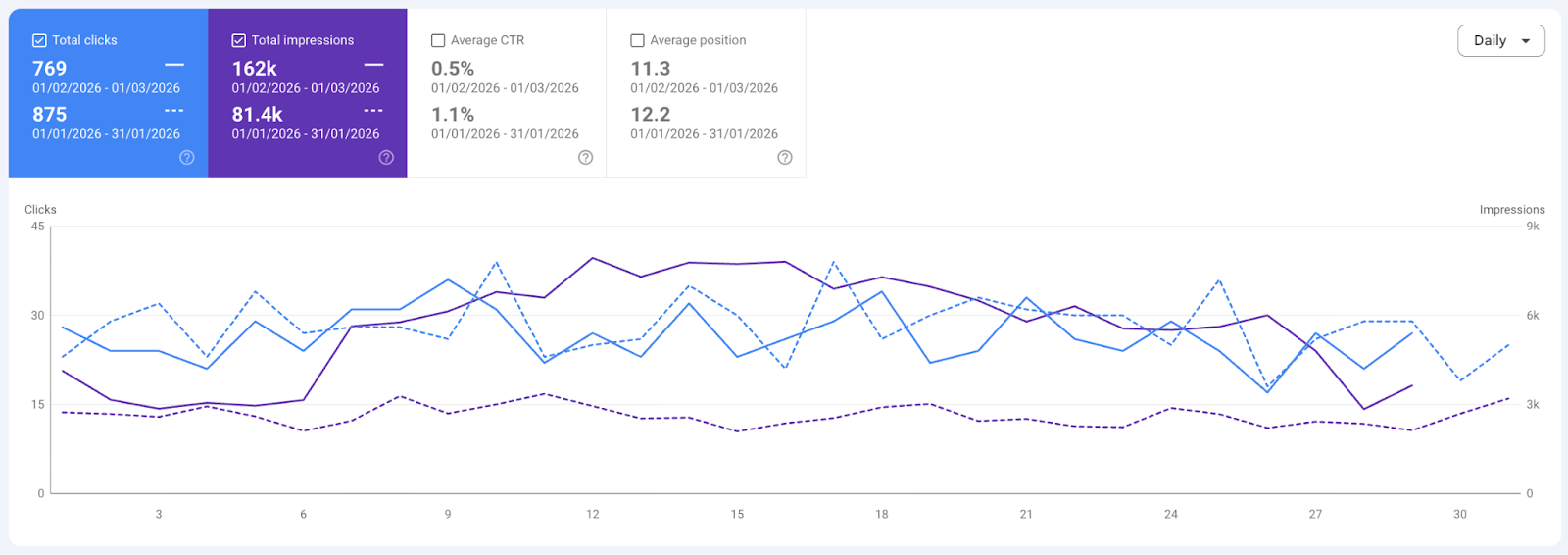
We’re Embarque, an SEO agency with published case studies across ecommerce, SaaS, local businesses, and marketplace clients. Our work with Apadana Rugs & Carpets delivered a 99% increase in organic impressions and consistent Local 3-Pack rankings across Connecticut. We've helped retailers turn search into a scalable growth channel. This hands-on experience gives us a practical, proven perspective on helping brands rank and drive sales.
Why Furniture Store SEO Matters More Than Ever
When someone searches for "sofa store near me," does your store show up? If not, you're losing customers before they ever walk through your doors.
Furniture is a considered purchase. Nobody impulse-buys a sofa. The average shopper visits three websites and three stores before deciding, per the 3D Cloud Furniture Shopping Trends Study 2024. That research phase is almost entirely digital.
According to research from PGM Solutions, 92% of shoppers begin their furniture search online, and 70% conduct online research before making a purchase. Local search carries equal weight. SEO Tribunal reports that 46% of all Google searches have local intent, and 42% of local searchers click a result in the Google 3-Pack. If you run a physical showroom, local SEO is your most direct path to foot traffic.
But there's another shift happening. People are using AI tools like ChatGPT and Perplexity. They use them to find furniture recommendations. When we tested visibility across LLMs for local queries, results were inconsistent. One store ranked #8 in one town but didn't appear at all in others.
Why? LLMs rely on structured, location-specific content. If your site lacks clear location signals, AI tools can't confidently recommend you. The brands winning in 2026 are optimizing for both traditional search and AI-driven discovery.
Understanding the Furniture Buyer's Journey
Furniture buyers don't search the same way at every stage. Before you optimize anything, you need to understand how furniture buyers actually search.
The journey has three broad stages, and each one requires different SEO tactics.
- Awareness: The buyer is browsing. They search things like "living room rug ideas" or "how to choose furniture for a small room." They are forming preferences and shortlisting stores. Informational content does the work here.
- Consideration: The buyer is narrowing down. They search "Persian rugs Connecticut" or "best furniture store near me." Local SEO and category pages are critical.
- Decision: The buyer is ready. They search brand names or specific items and are looking for pricing, availability, and trust signals. Product pages and reviews close the deal.
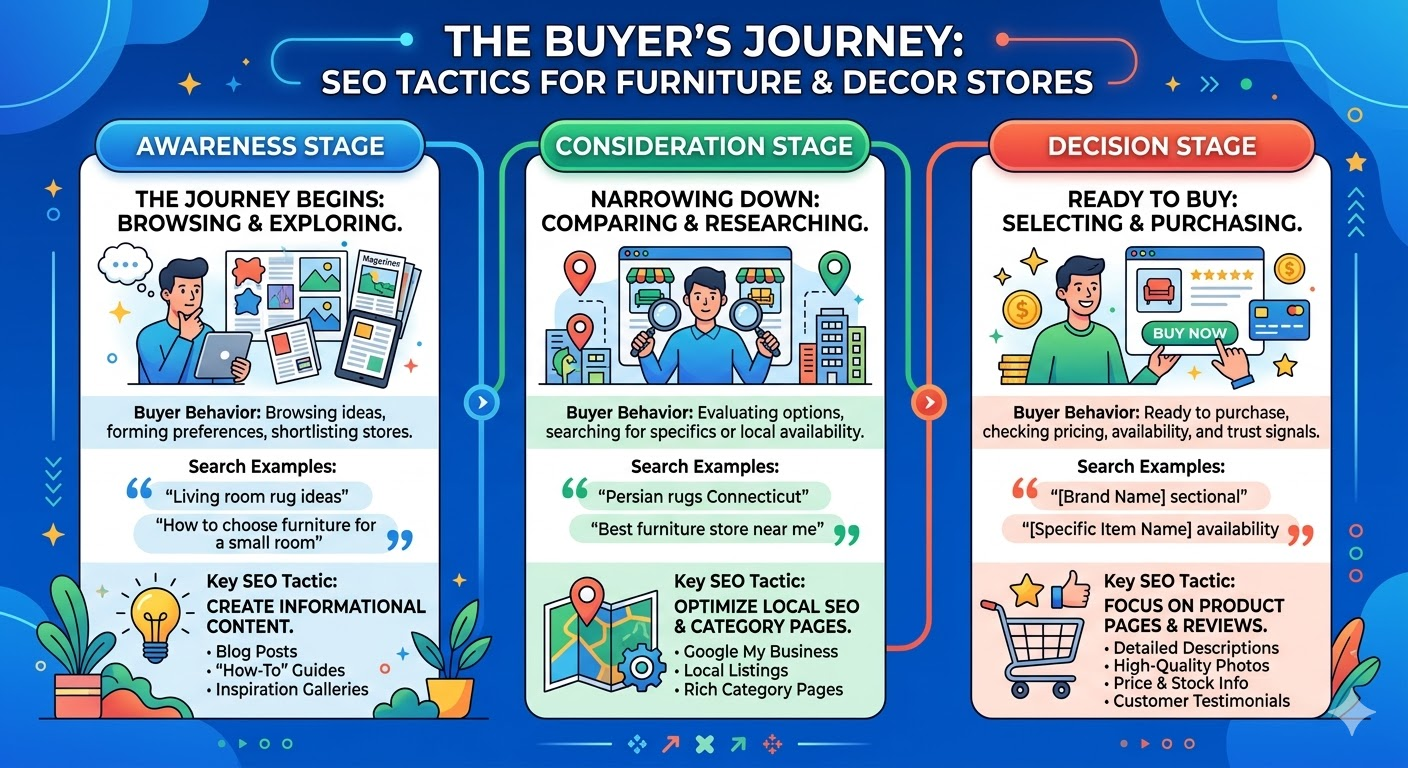
Most furniture store websites over-invest in the decision layer and underinvest in awareness and consideration. Building visibility in those earlier stages puts you in front of buyers before they commit to a competitor.
The 7 Core Areas of Furniture Store SEO
Furniture store SEO isn't one thing. It's a combination of interconnected disciplines. Neglect any one area, and your results will suffer. Master all seven, and you'll dominate local and national search.
Let's break down each one.
1. Keyword Strategy for Furniture Stores
A good keyword strategy for furniture stores requires thinking in layers. Each layer serves a different buyer at a different stage.
Category and Collection Keywords
These are your highest-volume, highest-intent pages. Terms like "outdoor rugs," "Persian rugs," "modern furniture," and "sectional sofas" get searched tens of thousands of times monthly.
When we worked with Apadana, we identified that "outdoor rugs" had 30,000 monthly US searches. "Persian rugs" pulled 17,000. Several competitors ranking for these terms had surprisingly low domain authority. That meant Apadana could realistically break into the top results with the right optimization.
Each major product category needs a dedicated, optimized page with a proper H1, not an H2. It needs introductory copy that matches intent, FAQ sections targeting related long-tail questions, and internal links to sub-categories. Collection page schema is also valuable. It helps Google understand that your collection pages are category hubs, not thin content pages.
Local Keywords
For stores with physical locations, local keywords drive foot traffic. Terms like "furniture store near me," "rug store Portland," and "area rug store Westport" carry strong purchase intent and lower competition than broad national terms.
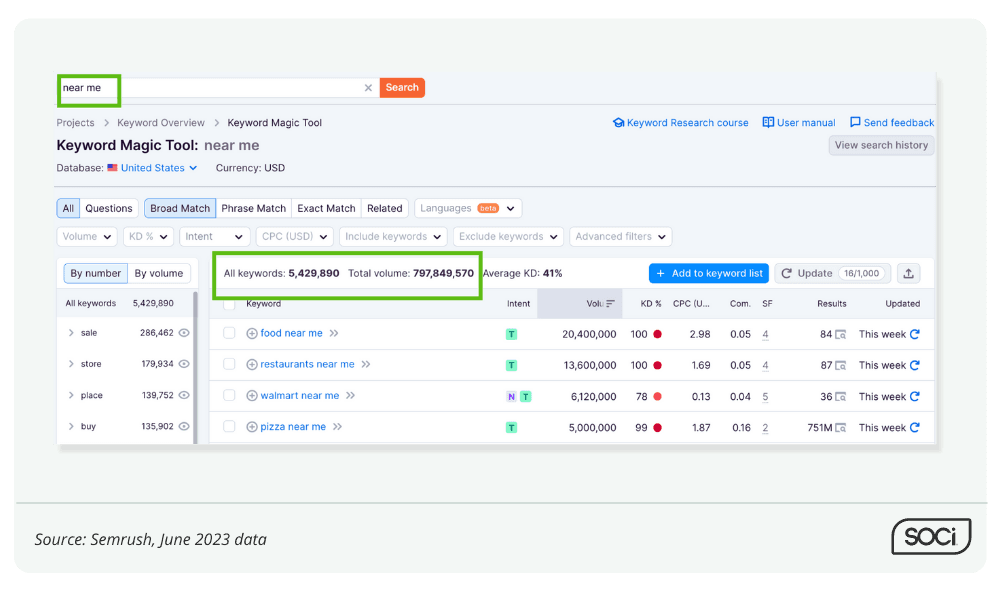
Semrush data shows over 800 million monthly searches containing some "near me" variation in the US. The opportunity rewards stores that invest in location pages and Google Business Profile optimization.
Informational Keywords
Buyers in the awareness stage want help. They search "what size rug for queen bed" (3,700 monthly searches), "how to clean a rug" (6,500), and "how to choose a rug for a small room" (3,700). These are volumes that rival many category pages. Ranking for them earns traffic earlier in the buying cycle and builds topical authority that strengthens your category pages too.
Sub-Category Keywords
Parent categories like "Oriental rugs" attract volume, but sub-category pages are easier to rank and convert better. A shopper searching "Kazak rugs" or "Heriz rugs" has already narrowed their consideration set.
Parent category pages should link down to these sub-categories. Sub-categories should link back up to parent pages. This structure reinforces topical relationships and helps search engines understand your site architecture.
Sub-category architecture is one of the strongest long-term SEO levers in furniture ecommerce. Each sub-page strengthens topical authority for the parent and captures high-intent long-tail traffic.
2. On-Page SEO for Furniture Stores
Getting traffic to a page is only part of the job. The page itself has to be built to rank and convert.
H1 Tags and Page Structure
Every collection page, product page, and content piece needs a clear H1 that includes the primary keyword. This sounds basic, but it is surprisingly common for furniture ecommerce sites to use H2 tags as the first visible heading on collection pages. That weakens the page's relevance signal. Fix this before anything else.
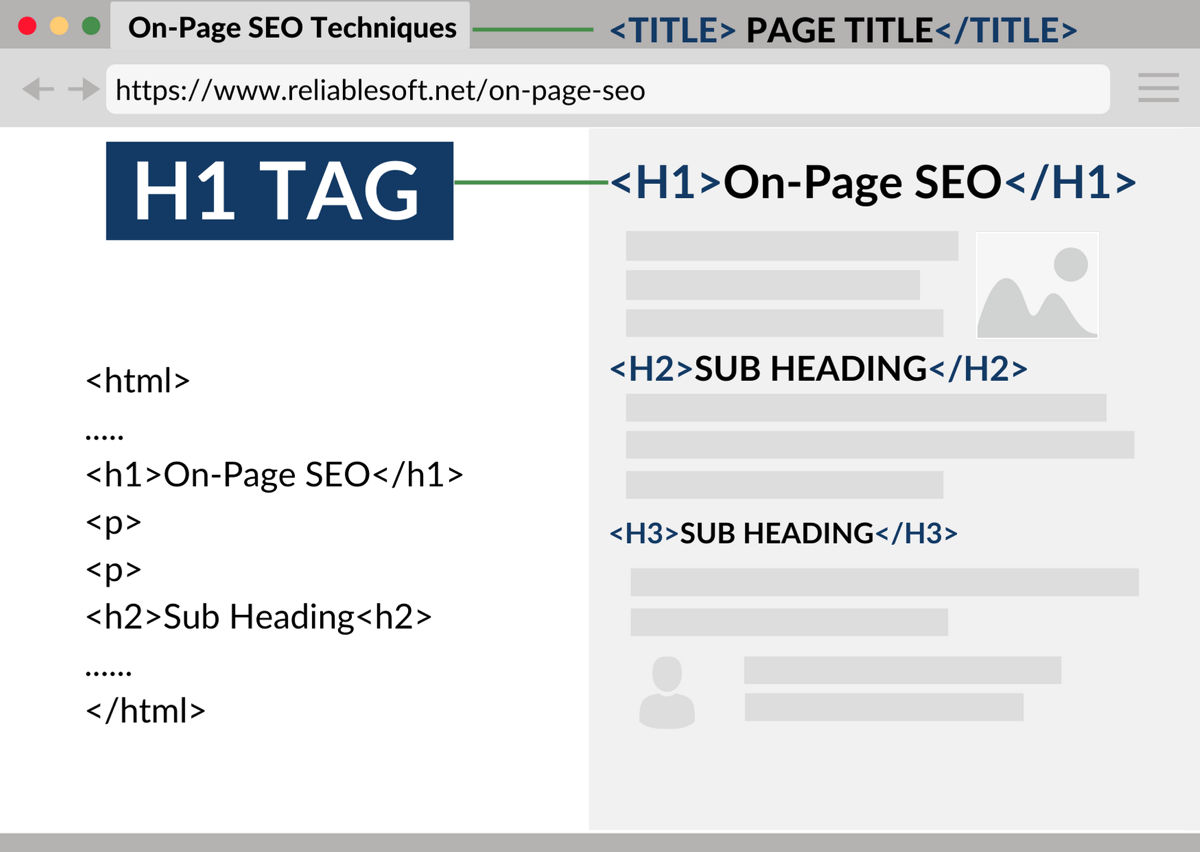
Beyond the H1, use H2 and H3 subheadings to structure your content logically. Each section should serve a purpose: answering a related question, describing a sub-category, or addressing a common concern. Clear structure helps both search engines and real shoppers navigate the page.
Meta Titles and Descriptions
Meta titles should include the primary keyword and your location or brand where relevant. Keep them under 60 characters. Meta descriptions should be under 160 characters, written to compel a click. A weak meta description on a high-impression page is a missed conversion opportunity.
Introductory Copy That Matches Intent
The first 100 to 150 words of any collection page are critical. Write copy that acknowledges the buyer's need, introduces the category clearly, and moves them toward product browsing. Avoid generic descriptions that explain the product category in the abstract. Get to the point quickly.
FAQ Sections
FAQ sections rank for long-tail variations of your primary keyword and give buyers answers that might otherwise prevent a purchase. Use them on every major collection page. Structure each question as an H3 in natural language that mirrors real search queries.
Example for an outdoor rug collection:
- Can outdoor rugs be used indoors?
- How do you clean an outdoor rug?
- Are outdoor rugs waterproof?
- What's the difference between indoor and outdoor rugs?
Each answer should include internal links. Link to relevant sub-collections. Link to related content.
Internal Linking
Every collection page should link to its relevant sub-categories. Every informational blog post should link to the most relevant product pages. Furniture stores have natural internal linking opportunities inside FAQs, in-body comparisons, and care guides.
Schema Markup
For furniture stores, the most important schema types are Product, FAQPage, LocalBusiness, and BreadcrumbList. Adding product schema with pricing, availability, and review data can generate rich snippets in search results, improving click-through rates without any change in rankings.
3. Local SEO for Furniture Stores
If you have a physical location, local SEO is where a significant portion of your customers come from. Two in three US consumers have already decided what they are going to buy before they visit a physical store. They are making that decision online. You want to be part of that decision.
Google Business Profile Optimization
Your Google Business Profile (GBP) is the foundation of local SEO. It determines whether you appear in the Google 3-Pack, and it is often the first information a local searcher sees about your store.
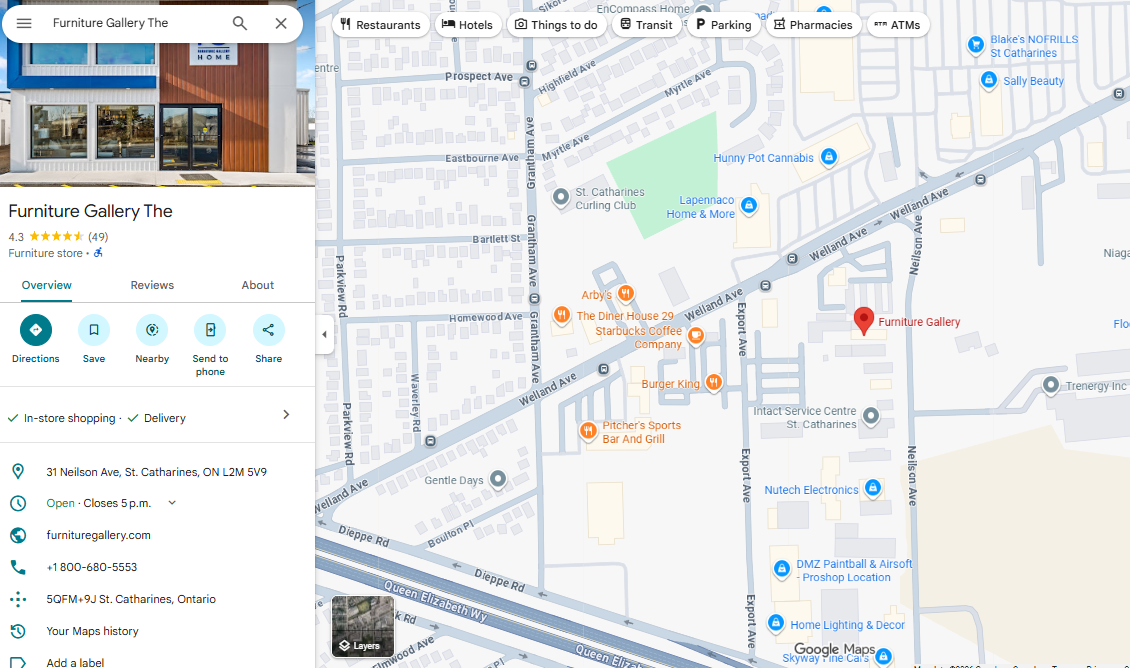
Fill out every field: business name, address, phone number, hours, website, and categories. Upload photos of your showroom, your products, and your team. Write a business description that includes your primary location and product categories naturally.
Complete GBP listings receive 7x more clicks than incomplete ones. Post updates regularly: new arrivals, promotions, or hours changes. Google treats GBP activity as a freshness signal.
Reviews
Reviews are both a ranking factor and a conversion signal. 47% of consumers will not use a business with fewer than 20 reviews, and 68% require at least a 4-star rating before considering a business. Ask every satisfied customer for a review.
To make it easy, send a direct link to your GBP review form after a purchase. Respond to every review, positive and negative. Response rate and recency both factor into how Google evaluates your profile.
Location-Specific Pages
For stores serving multiple cities or towns, individual location pages are a powerful lever. Each page should include location-specific copy, the store's NAP (name, address, phone number), nearby areas served, and local customer testimonials where available.
These pages signal to Google and to LLMs exactly which areas you serve. When we built location pages for Apadana covering towns across Fairfield County, it directly improved their Local 3-Pack visibility across a 10+ mile radius. LLMs like ChatGPT and Perplexity use structured, location-specific content to decide which businesses to recommend in AI-generated answers, so this work pays off in both traditional and AI search.
NAP Consistency
Your business name, address, and phone number must be identical across every online directory: your website, GBP, Yelp, Bing Places, and Apple Maps. Inconsistencies confuse search engines and reduce local ranking potential. Run a citation audit and fix any discrepancies.
4. Technical SEO for Furniture Stores
Technical SEO is the infrastructure that makes everything else work. You can have excellent content and a well-optimized GBP, but crawlability issues, slow load times, or broken pages leave significant performance on the table.
Page Speed and Core Web Vitals
Furniture store websites carry heavy image loads. Unoptimized product photography is one of the most common causes of slow load times, especially on mobile.
Technical fixes:
- Compress images without sacrificing quality.
- Use WebP format.
- Implement lazy loading for below-the-fold content.
- Minimize JavaScript and CSS.
- Use a content delivery network (CDN)
Google's Web Vitals directly affect rankings. Monitor Largest Contentful Paint, Cumulative Layout Shift, and Interaction to Next Paint in Google Search Console.
Mobile Optimization
Over half of furniture-related searches happen on mobile. Test your site across device sizes. Check that product filters, navigation menus, and CTAs work cleanly on smaller screens.
Crawlability and Index Health
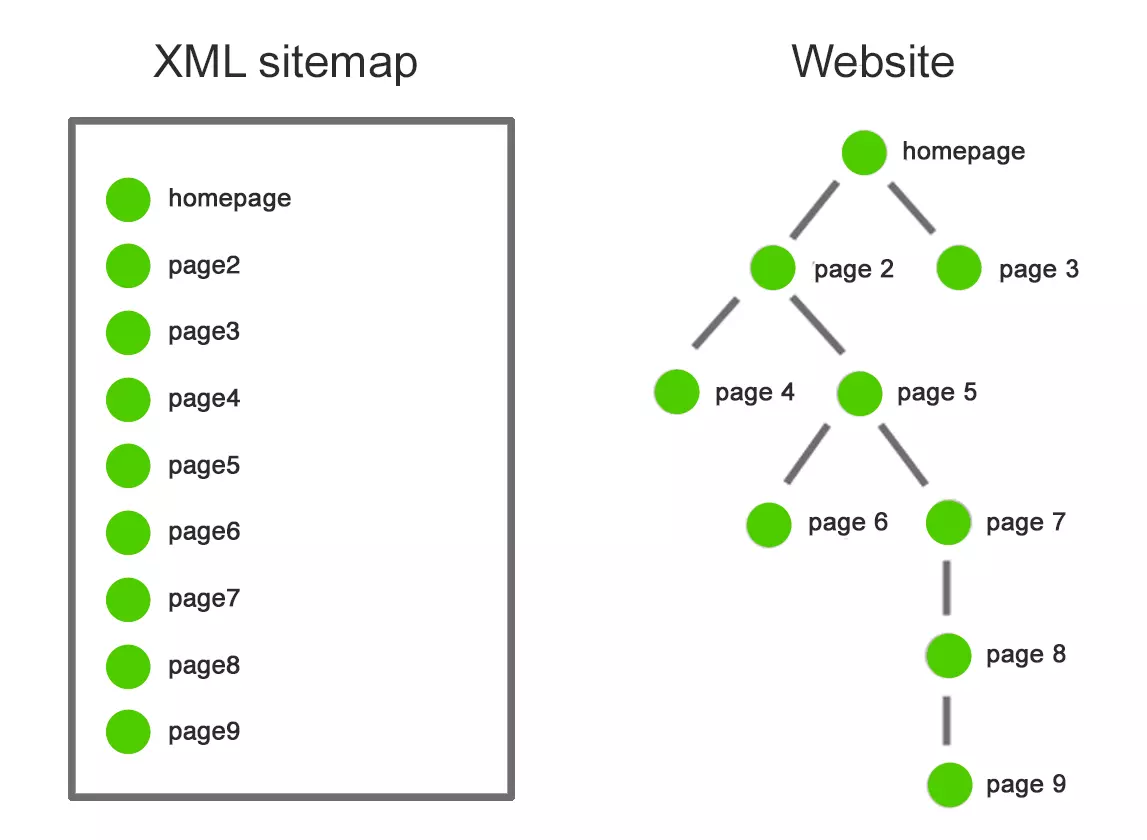
Submit an XML sitemap via Google Search Console. Check for noindex tags on pages that should rank. For large product catalogs, faceted navigation can generate thousands of duplicate URLs from filtered product listings.
Also, use canonical tags to point these back to primary category pages and prevent index bloat. Fix broken internal links and set up 301 redirects for discontinued products or changed URLs.
5. Content Strategy for Furniture Stores
Content is how furniture stores build topical authority, attract buyers in the early stages of the purchase journey, and earn organic traffic that compounds over time.
Rug Care and Furniture Care Guides
Care content is high-volume, evergreen, and directly relevant to your buyers. Queries like "how to clean a wool rug" (2,500 monthly searches), "how to flatten a rug" (2,700), and "how to clean a shag rug" (2,200) pull in shoppers who already own products like yours. These readers are highly likely to be in your target market.
A well-written care guide builds trust, earns backlinks from home and lifestyle sites, and creates natural internal linking opportunities back to relevant collection pages.
Sizing and Placement Guides
"What size rug for king bed" (3,600 monthly searches) and "how to place a rug in a living room" (1,600) are questions buyers ask before purchasing. Ranking for these queries puts you in front of active shoppers at a critical decision point.
These guides also perform well in AI search, since ChatGPT and Perplexity frequently cite well-structured, authoritative sizing content when answering home furnishing questions.
Comparison and Buying Guides
"What is the difference between carpet and rug?" gets 4,400 monthly searches, and "how to choose an area rug" gets 350. These attract buyers in active consideration. A genuinely useful buying guide earns long-tail traffic and positions your brand as knowledgeable. Write for the reader's actual decision, and let the product recommendations follow naturally from the advice.
6. Optimizing for AI Search
AI-generated answers are becoming a meaningful part of how buyers discover furniture stores. Perplexity answers questions with source citations. Google AI Overviews appear for a growing share of informational queries.
The LLM Visibility Problem
When we tested Apadana's LLM visibility across ChatGPT, Perplexity, Claude, and Gemini for local queries, their highest placement was #8 for Westport. In most other towns, they ranked #12 or lower. In Fairfield and Greenwich, they did not appear at all.
The root cause was a lack of strong location signals in their content. LLMs rely on structured, location-specific content to determine which businesses to recommend.
Structure Content for AI Extraction
AI systems extract answers quickly. Pages that open with a direct answer perform better than pages that build context before getting to the point. Use clear headings, short paragraphs, and FAQ-style sections. Well-organized pages are simply easier for AI models to work with.
Build Location Signals for LLM Visibility
The most direct way to improve AI search visibility is to build out location pages. Publish locally relevant content. Each location page should clearly state the areas served. Include local landmarks or references. Provide structured NAP information.
This is what we did for Apadana. We built location pages covering high-value cities. Each had clear location signals. These pages essentially hand the answers to LLMs on a silver platter.
Earn Citations From Sources LLMs Trust
AI systems cite sources they have learned to trust. High-authority home and lifestyle publications, interior design directories, and local business guides all carry weight. Earning mentions from these sources makes it more likely AI-generated answers include your brand.
For stores wanting to accelerate this, there's dedicated LLM visibility work. This involves identifying the sources LLMs frequently cite. Then earning inclusions through guest posts, listicles, and high-authority citations.
The tradeoff is cost. These insertions can be three to five times more expensive than regular backlinks. But they create presence in the exact sources AI systems treat as authoritative. This is where traditional SEO and AI SEO converge, since building authority for Google and for LLMs requires the same underlying work.
7. Link Building for Furniture Stores
Links from other websites remain one of the most powerful ranking signals in SEO. For furniture stores, the most productive channels are:
- Local press and community coverage
- Home and lifestyle publications
- Interior designer partnerships
- Supplier and manufacturer citations
- Category page targeting
Quality matters more than volume. A handful of links from authoritative home and lifestyle sites will outperform dozens of low-quality directory links. The latter can actively harm your rankings if they look unnatural.
Tracking SEO Performance for Furniture Stores
If you're not measuring, you're guessing. But furniture store SEO requires tracking different metrics depending on your business model.
For Local Stores with Physical Showrooms
Most furniture purchases happen in-store, not online. So website traffic alone doesn't tell the full story. The primary success metrics are Google Business Profile interactions: direction requests, phone calls, and website clicks. These signals show customers are moving toward a visit.
For National Ecommerce Stores
If you're selling furniture online, focus on organic traffic to collection pages, keyword rankings for high-volume terms, conversion rates, and revenue from organic search.
Metrics to Track Consistently
- Organic sessions and clicks from Google Search Console and Analytics. Track week-over-week and month-over-month to identify trends.
- Keyword rankings for primary category, local, and informational targets. Tools like Ahrefs, Semrush, or Mangools give you ranking history over time.
- Local 3-Pack visibility: Track how often your GBP appears in local pack results. This is distinct from organic rankings and requires separate attention.
- Impressions: Impressions often move before clicks during an SEO campaign. Growing impressions are a leading indicator that your pages are gaining ground. This is the pattern we saw with Apadana: impressions grew 99% in a single month as new collection pages entered search results, with clicks following as rankings strengthened.
- Conversions: Organic traffic only matters if it drives revenue. Track contact form submissions, phone calls, direction requests, and purchases. This connects SEO activity to actual business outcomes.
Monthly Reporting Structure
Provide clear monthly reporting. Keep progress transparent. Each month's report should include:
- Summary of SEO work completed
- Updates made to listings, citations, and website pages
- Key performance indicators (interactions for local stores, traffic, and revenue for ecommerce)
- Local ranking trends for target topics
- Next steps and priorities for the following month
Ready to Get Your Furniture Store Ranking?
SEO for furniture stores isn't a one-time project. It is a persistent, revenue-driving system. High-intent searches start on category pages. Local signals then pull customers through your doors. Content builds trust while technical health ensures Google indexes everything. Finally, quality links cement your market authority.
The stores that win in search are the ones that treat SEO as a business function rather than a one-off task. If you want a clear picture of where your store stands and what the highest-impact opportunities are, then you’re at the right stop.
Embarque offers a free 15-minute growth session where we show you exactly where your next SEO wins are. Book a call here to get started.