





Content that matches Copilot's internal retrieval phrases, is structured for extraction, is factually grounded, and comes from authoritative domains.
Below is a breakdown of exactly what that looks like in practice.
Content that matches grounding queries
Microsoft's AI Performance dashboard in Bing Webmaster Tools surfaces "grounding queries," the specific phrases Copilot's retrieval system uses internally to fetch content. These differ from the keywords users type. They represent the AI's own logic for locating facts.
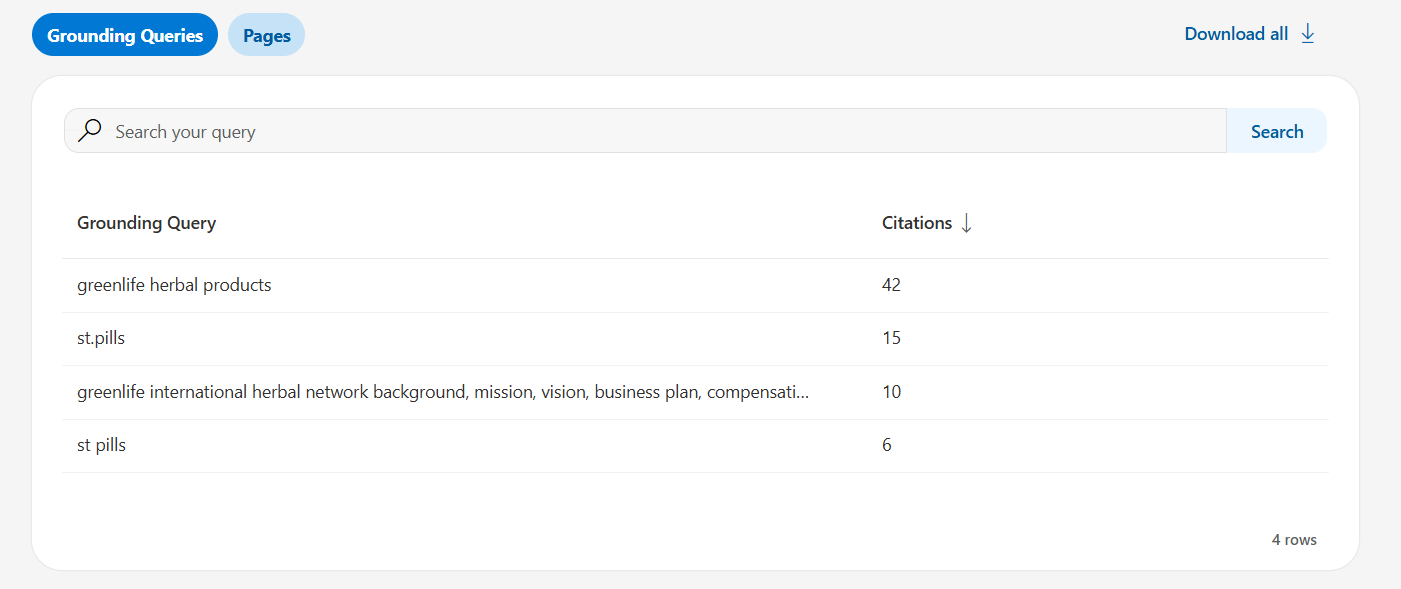
If your content explicitly contains these phrases in a clear, extractable format, it gets cited. If it doesn't, it gets skipped, regardless of how well it ranks in traditional search.
The dashboard also tracks total citations and average cited pages per domain. Content that appears repeatedly in these reports shares a common trait: it's structured in a way Copilot trusts enough to return to.
What to do: Use Bing Webmaster Tools to identify your grounding queries. Then audit whether your content directly and clearly answers those specific phrases.
Content structured for extraction
Copilot doesn't read pages the way a human does. It breaks content into chunks and pulls individual sections that can stand alone as complete answers. This changes how you should write entirely.
Copilot preferentially extracts from:
- Bullet points and numbered lists: Step-by-step instructions and feature breakdowns are highly extractable.
- Tables: Structured comparisons get pulled cleanly into synthesized answers.
- Short, definitive paragraphs: Concise "What is X?" explanations work well.
- FAQ sections: Direct question-and-answer pairs are among the most cited formats.
Long narrative prose without clear subheadings or modular sections is harder for the AI to parse. If a paragraph can't stand alone as a factual answer, it's unlikely to be cited.
What to do: Break your content into self-contained sections. Every H2 or H3 should answer a specific question on its own. Prioritize structured formats over flowing prose.
Fact-based, verifiable content
Microsoft's proprietary "Prometheus" system acts as a trust and safety layer, filtering content before Copilot cites it. It favors content with specific, verifiable claims and filters out anything that reads as biased, promotional, hyperbolic, or vague.
Copilot is explicitly designed to avoid citing:
- Salesy or marketing-heavy language
- Vague generalizations without supporting data
- Emotionally persuasive content without factual backing
- Opinion presented as fact
Calm, objective, and transparent writing passes the filter. Content that cites data, includes concrete examples, and references authoritative sources performs significantly better.
What to do: Audit your content for promotional language. Replace claims like "industry-leading solution" with specific metrics and evidence. Link out to credible sources.
Authoritative and entity-clear content
Copilot runs on Bing's underlying index, so Bing's trust signals apply directly. Domain authority, backlink profile, and entity clarity all influence citation likelihood.
Entity clarity is especially important. If Copilot, via the Bing Entity Graph, cannot clearly classify what your page is about (your brand, product, or topic), it will not cite it. Consistent naming across your site and structured data such as Organization or Product schema help Copilot categorize and trust your content.
Expertise also matters at the page level. Author bylines, detailed documentation, comprehensive topic coverage, and demonstrated subject matter depth all contribute to what Copilot treats as its "enterprise trust" layer.
What to do: Implement structured data markup. Keep entity references (your brand name, product names, topic labels) consistent. Add author credentials and expertise signals to key pages.
Fresh and regularly updated content
Copilot places significant weight on content freshness, particularly for queries where information changes over time: software features, pricing, tools, current best practices.
Sites using the IndexNow protocol get an added advantage. IndexNow instantly notifies Bing when content is published or updated, meaning Copilot references your most current version rather than a cached, outdated one.
Static pages that haven't been touched in months or years are consistently deprioritized for time-sensitive queries.
What to do: Establish a content refresh schedule. Update statistics, examples, and feature details regularly. Implement IndexNow if your CMS supports it.
Comparison and "Best Of" content
Copilot frequently synthesizes answers to comparison and recommendation queries. Users ask things like "X vs Y," "best tools for Z," or "alternatives to [product]," and Copilot needs specific content to build those answers from.
The page types most likely to be cited for these queries include:
- Competitor comparison pages ("X vs Y")
- Category listicles ("Best [tool type] for [use case]")
- Alternative guides ("Top alternatives to [product]")
- Specific how-to guides that solve a named problem
These pages help Copilot understand competitive positioning and include your brand as a viable option in synthesized responses. They also tend to match grounding queries very directly, since they're built around specific, intentional phrases.
What to do: Build comparison and alternative pages targeting your key competitive terms. Structure them with tables, clear verdicts, and specific feature callouts rather than vague narrative summaries.