





SEO teams should prepare by expanding their analytics stack beyond on-site metrics to track citation frequency, platform-level AI visibility, and Total Search reporting across AI-powered interfaces.
Why your current analytics stack might be falling short
Standard analytics tools were built for a world where users click through to websites. That world is shrinking fast.
AI Overviews, ChatGPT, and Perplexity now answer questions directly within the interface, meaning users get what they need without ever visiting your site. If your stack only measures sessions, bounce rate, and on-site conversions, you are missing most of what is actually happening with your brand in search.
"Total Search" now spans Google, Bing, ChatGPT, Perplexity, Gemini, and Reddit, but traditional tools were not designed to track brand presence across these environments.
To make things worse, AI Mode and AI Overviews data in Google Search Console are merged with other search types, so query-level attribution from AI searches is unavailable. Teams relying solely on standard GSC reports are flying blind.
What to track: the new AI-first metrics
Citation frequency and share of voice
The primary KPI in AI-driven search is how often your content is cited or mentioned inside AI-generated answers. This is not a vanity metric. It directly reflects whether your brand is part of the conversation when users are making decisions. Track citation frequency across multiple LLMs, and benchmark it against competitors to understand your relative share of voice.
Platform-level breakdown
Being cited in ChatGPT requires different optimization than appearing in Google AI Overviews or Perplexity. Each platform has different training data, retrieval logic, and formatting preferences. Your analytics need to slice visibility by engine, not just report an aggregate number.
Mention sentiment
Volume alone is not enough. An AI citing your brand negatively, or misrepresenting your product, is worse than not being cited at all. Sentiment analysis on AI mentions helps you catch misinformation early and protect brand safety before it influences purchasing decisions at scale.
Off-site engagement signals
Research, product comparison, and purchasing decisions increasingly happen inside AI chat interfaces, not on your website. Impression share within AI answers is now a meaningful off-site metric. If you are only looking at on-site conversions, you are measuring the tail end of a journey that started somewhere you are not tracking.
Technical infrastructure: building the right data stack
Consolidate your data sources
Fragmented data leads to guesswork. Pull signals from Google Search Console, Google Analytics, AI visibility platforms, and social listening tools into a single dashboard. When these sources live in silos, you get incomplete pictures and slow decisions.
Invest in GEO and AI visibility tools
Generative Engine Optimization (GEO) tools are now a necessary part of the SEO tech stack. Platforms like SE Ranking, BrightEdge, AthenaHQ, and Search Party provide predictive AI visibility analysis and monitor citations across LLMs. They do not replace GSC or GA4, but they fill the gaps those tools cannot cover.
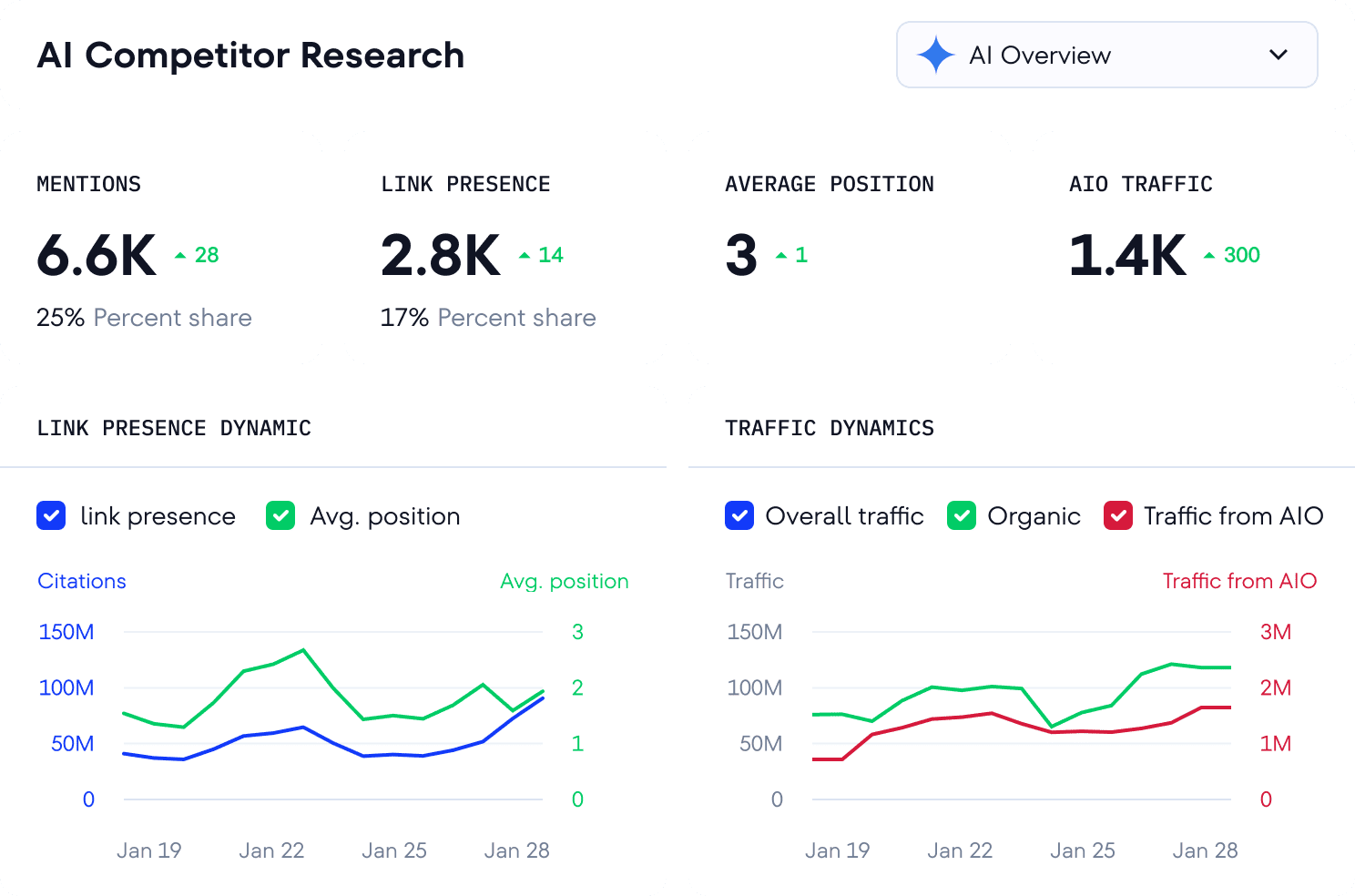
Build custom dashboards for attribution
For teams with the resources, proprietary dashboards that attribute traffic and revenue from ChatGPT, Perplexity, and Gemini give you longitudinal data even when third-party datasets are imperfect. The goal is to monitor growth trends over time, not to achieve perfect accuracy from day one.
Content strategy: what the analytics should be telling you
Track content freshness as a ranking signal
Research shows content less than three months old is three times more likely to be cited in AI-generated answers. Your analytics should flag aging content before it loses visibility, not after. Build "content decay" alerts into your workflow, so refresh decisions are proactive, not reactive.
Prioritize targeted refreshes over new content
Unified analytics platforms can surface pages that already get citations but are not fully answering current questions. Closing those gaps through targeted updates has delivered over 40% traffic lifts in documented cases. This is higher leverage than publishing net-new content on unproven topics.
Measure at the passage level
AI systems retrieve specific sentences and paragraphs, not entire pages. Your analytics should track which passages are being cited, not just which pages rank. This shifts content optimization from page-level thinking to chunk-level thinking, which changes how you structure headers, definitions, and summaries.
Team structure: who owns AI search data?
Make it cross-functional
AI search analytics cannot sit inside the SEO team alone. Understanding your full footprint requires input from content, PR, community management, and data science. PR knows what narratives are circulating. Community managers see brand mentions on Reddit and forums that AI systems index heavily. Data science can build the attribution models. SEO coordinates the strategy.
Assign explicit ownership of AI metrics
Without a named owner, data goes unreviewed and unactioned. Designate a specific role, whether an SEO analyst or an AI search strategist, to monitor citation frequency, platform breakdown, and sentiment on a monthly cadence. Make it a standing agenda item in reporting calls.
Shift to "total search" reporting
Replace channel-specific reports with integrated reports that track Total Search visibility, Total Search conversions, and blended ROI across traditional and AI platforms. The goal is a single view of how your brand performs wherever users are searching, regardless of interface.
This does not replace platform-level tracking; it sits above it. Granular data by engine informs what you optimize, while total search data informs how you grow.