





AI citation data tells you exactly which content formats, structures, and authority signals cause AI systems to reference your work.
Which content types get cited most by AI?
Listicles, category hubs, how-to documentation, and product pages account for 45-50% of all AI citations. If you are allocating content resources, these formats should come first.
More specialized formats like API docs, calculators, and competitor comparison pages only work well in specific verticals. In technology, they can generate 5-50x more citations than average. Everywhere else, they barely register. Match your format to your vertical before investing.
How should you structure content for AI extraction?
AI systems do not read content the way humans do. They scan for segmented, self-contained answer blocks they can extract and present cleanly.
Structure your pages around discrete response units rather than long-form narrative.
- For "best of" content, use numbered lists
- For problem-solving content, use step-by-step tutorials
- Format H2s and H3s as the exact questions your audience types into search or AI tools, then answer those questions directly in the first sentence underneath each heading.
Tables and bulleted lists also matter. Use clean HTML table elements for comparison data and bullets for feature sets. AI parsers prefer structured data they can reproduce without losing meaning.
What authority signals affect AI citation probability?
These three signals have the clearest impact:
- Schema markup tells AI who published the content, when, and why it should be trusted. Adding Article, Organization, and Person schema to key pages can increase reference probability by around 28%.
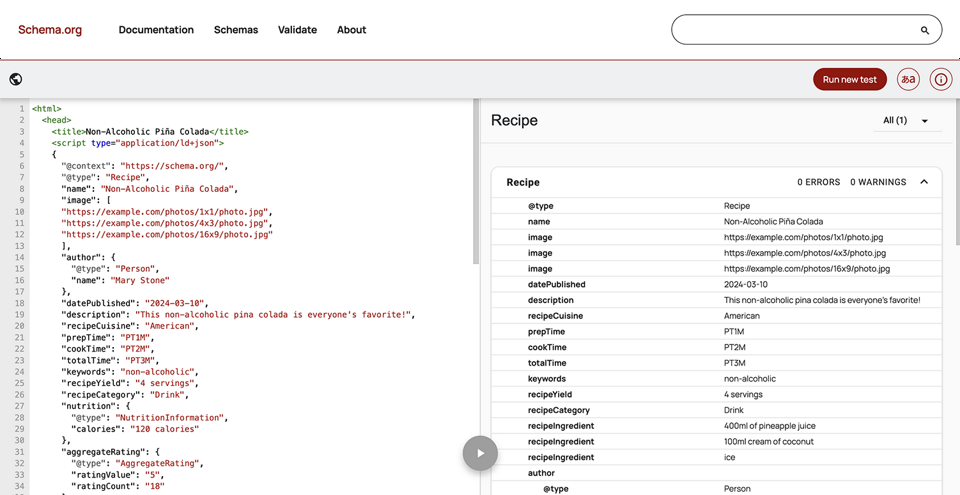
- Freshness is non-negotiable. Pages updated within the last 30 days get cited 3.2x more than stale pages. Always include and actively update the dateModified field in your schema. AI systems treat recency as a proxy for accuracy.
- Entity recognition means your brand, executives, and products are identifiable as distinct, trustworthy entities. Use consistent schema and sameAs properties linking to authoritative profiles like LinkedIn and Crunchbase. When AI systems can verify who you are, they are more likely to cite you.
How do you use AI crawler data to improve content?
Log file analysis gives you direct visibility into which pages GPTBot, PerplexityBot, and ClaudeBot visit most. High crawler frequency signals content these systems find valuable.
Once you identify your most-crawled pages, reverse-engineer what they have in common: content structure, formatting choices, topical depth, schema implementation. Turn those patterns into a blueprint for upgrading underperforming pages.
When auditing content for AI readiness, evaluate three layers:
- Technical: Page speed under 2 seconds, clean HTML, schema implementation
- Content: Answer-first formatting, use of lists, data-backed claims
- Authority: Freshness, backlinks, clear authorship signals
Pages that pass all three layers are citation-ready. Pages that fail any layer are leaving citations on the table.
How do you identify and close citation gaps?
Start by researching the prompts that matter to your business. Pull from keyword research, customer surveys, sales team conversations, and forums like Reddit and Quora. Reformat those keywords into natural language questions that reflect how people actually talk to AI tools.
Then run those prompts through ChatGPT and Perplexity and document every URL that gets cited. Build a spreadsheet tracking which topics, formats, and publications appear repeatedly.
From there, compare your citations against competitors. Find high-authority domains that cite them but not you. Those become your priority outreach targets. You are not just doing gap analysis for SEO; you are mapping the citation landscape and finding the specific doors you need to open.
Do brand mentions matter more than backlinks for AI visibility?
Yes, in the context of AI citation, brand mentions often carry more weight than traditional hyperlinks. AI systems evaluate co-citations: instances where your brand appears alongside key terms and topics on authoritative pages. That contextual association builds trust in a way a bare backlink cannot.
The practical implication is that your outreach strategy should shift. Rather than only pursuing link placements, identify publications that consistently appear in AI citations for your target prompts. Reach out to journalists and editors to get your brand included in their coverage, and prioritize context: your brand should appear alongside the terminology and topics that define your market.
For press assets, use a concise 40-60 word summary, 3-5 factual bullets with verifiable statistics, and NewsArticle schema. This format serves both journalist scrutiny and algorithmic evaluation at the same time.