





Yes, grounding queries are one of the most direct signals of unmet content demand available to SEO professionals today. When an AI assistant runs a grounding search, it means the answer wasn't already embedded in its training data. That's a gap. And gaps are opportunities.
Grounding queries expose the AI's blind spots
Every time an AI runs a real-time search to answer a user's question, it's telling you exactly what information it couldn't find on its own.
Traditional keyword research shows what users type into search bars. Grounding queries show what the AI itself searches for: a distinct layer of demand that sits between the user's question and the final answer the AI delivers.
If you rank for a grounding query, you fill that gap and become the cited source. If you don't rank for it, a competitor does, or the AI cobbles together an answer from whatever it can find.
What grounding queries actually look like
Users rarely ask simple questions. When someone asks, "What's the best CRM for marketing agencies?" the AI doesn't run one search. It runs several, something called the fan-out effect:
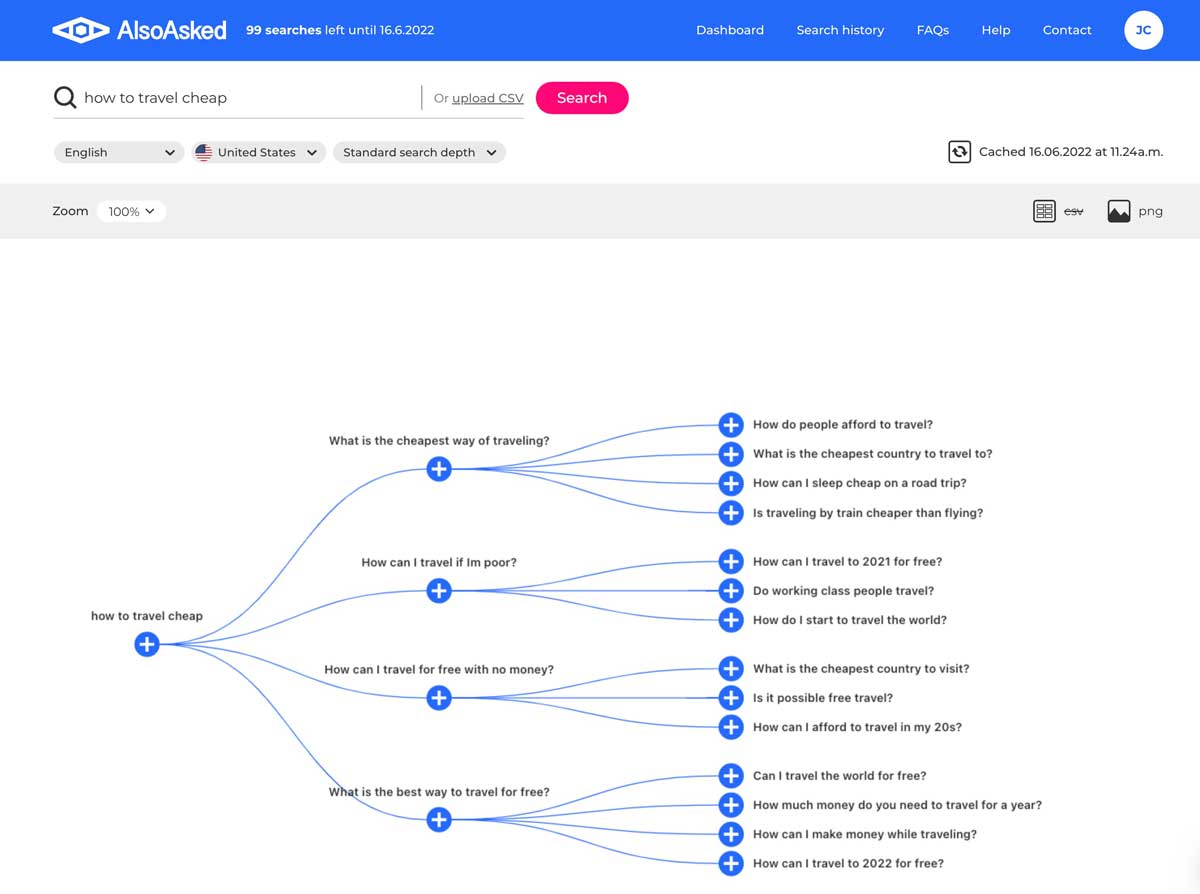
- "CRM software pricing comparison 2026"
- "best CRM for agency account management"
- "top rated CRM for small business reviews"
Each of those sub-searches is a grounding query. Each one is a content opportunity you can rank for.
Here’s how to find them:
- Spyglasses and similar platforms now surface these exact search strings in dashboards, complete with frequency data (how often AI assistants run that specific query)
- Browser dev tools let technical users monitor grounding behavior directly, including search_prob values that indicate how likely a query is to trigger a live search
- API metadata from services like Azure's AI Agent Service exposes grounding query strings within response objects for developers building on top of these models
How to identify high-priority content gaps
Not every grounding query deserves immediate attention. Prioritization matters.
The Impact Score approach weights grounding queries based on:
- Query frequency (how often the AI runs it)
- Your current ranking position
- Competitor presence in that slot
- Relevance to your core topic category
The rank/blank filter is where the clearest opportunities live. Filter for grounding searches where your site has no ranking in the top 10 or top 30 results. These aren't marginal improvements; they're direct gaps where the AI is actively searching for content you haven't written yet.
Competitor gap analysis validates the opportunity further. When you click into a specific grounding query and see that two or three competitors are already ranking, you've confirmed two things: the content is rankable, and there's a proven format to learn from.
How to turn grounding queries into content that gets cited
Identifying the gap is step one. Creating content that the AI will actually extract and cite is step two, and it requires a different approach than standard SEO content.
Target the exact query string
If the AI searches "best project management tools for remote teams 2026," your page should answer that question explicitly, not just touch on it as a passing mention inside a broader article.
Structure for extraction, not just readability
AI models pull specific "grounding chunks," sentences or short paragraphs that directly answer a question. Long-form essays with buried answers don't perform as well as content with clear, scannable answer blocks.
Optimize at the passage level
Key facts, statistics, definitions, and direct answers should live in their own isolated paragraphs or bullet points. If the answer is buried in sentence seven of a four-hundred-word paragraph, the AI is less likely to surface it cleanly.
You don't necessarily need a separate page for every grounding query. In most cases, you shouldn't.
A single comprehensive guide can and should rank for multiple related grounding searches. When an AI fans out across five different sub-searches to answer one user question, your content should address all five angles in one place. That's what a high-performing topic cluster looks like in an AI-first search environment.
Here’s how to execute this:
- Use the fan-out queries to map every subtopic the AI considers relevant to your main topic
- Build one authoritative page that covers all of them with depth and specificity
- Create supporting pages for subtopics that warrant more detailed standalone treatment
- Link between them with clear anchor text that signals topical relationships
This approach builds topical authority that both traditional search engines and AI retrieval systems recognize. This makes your content the go-to source the AI reaches for across an entire topic cluster.
How to measure whether your content is actually being cited
Content creation is only part of the loop. You need to verify that your new or updated pages are actually being cited.
The measurement cycle looks like this:
- Baseline report: Pull your current grounding queries and ranking positions before making any changes
- Create or optimize: Target high-impact grounding searches where you're missing or ranking poorly
- Re-measure: After your content indexes and rankings improve, run a new AI visibility report to confirm whether you're now being cited for those searches
- Repeat: Grounding queries aren't static. As your authority grows, the AI begins running new queries that include your brand, your specific frameworks, and your data, generating a continuous cycle of new discovery
The compounding effect here is meaningful. Each piece of cited content increases the probability that the AI surfaces your site for related grounding queries, which reveals new gaps, which generates new content opportunities.