







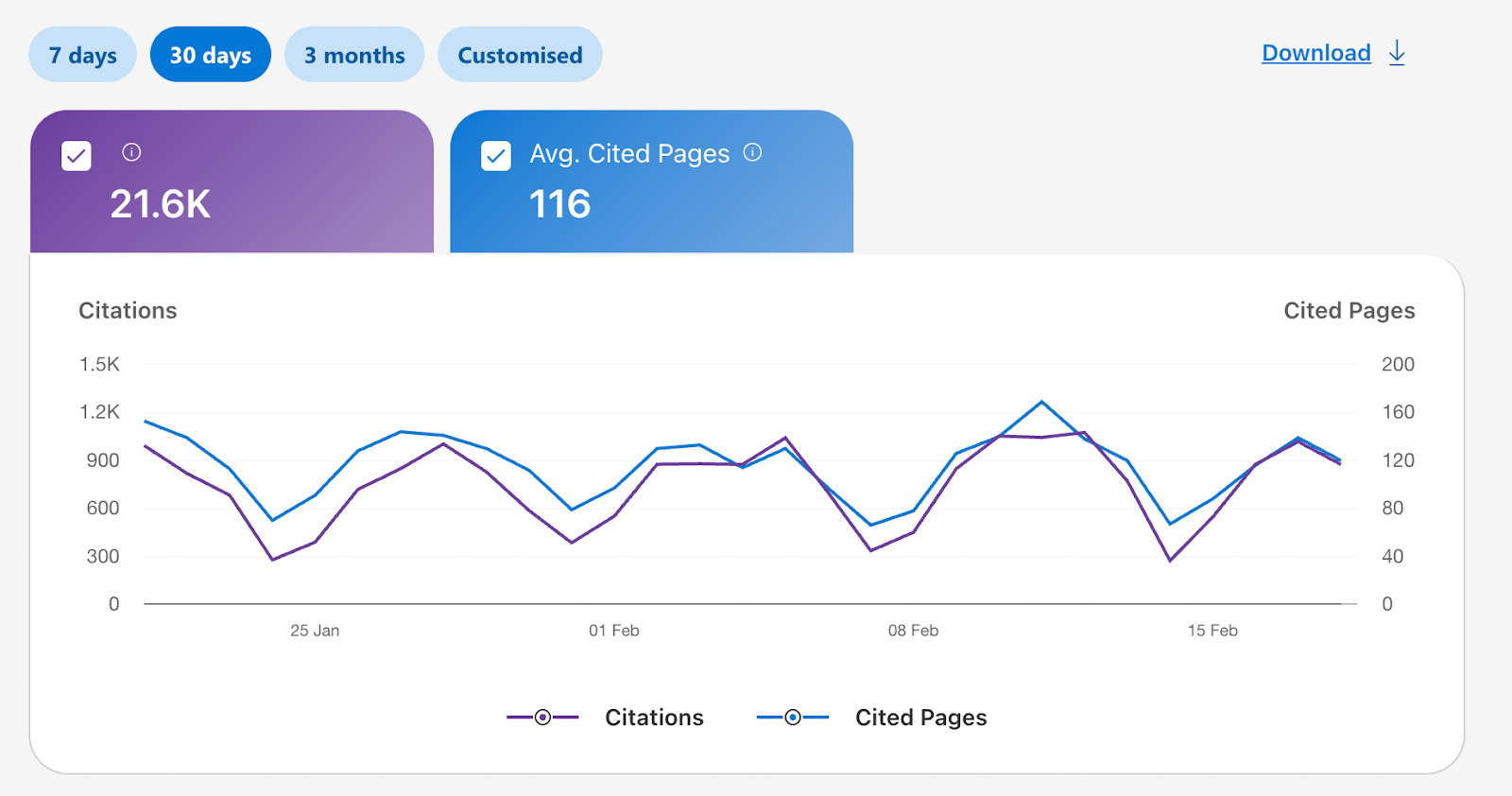
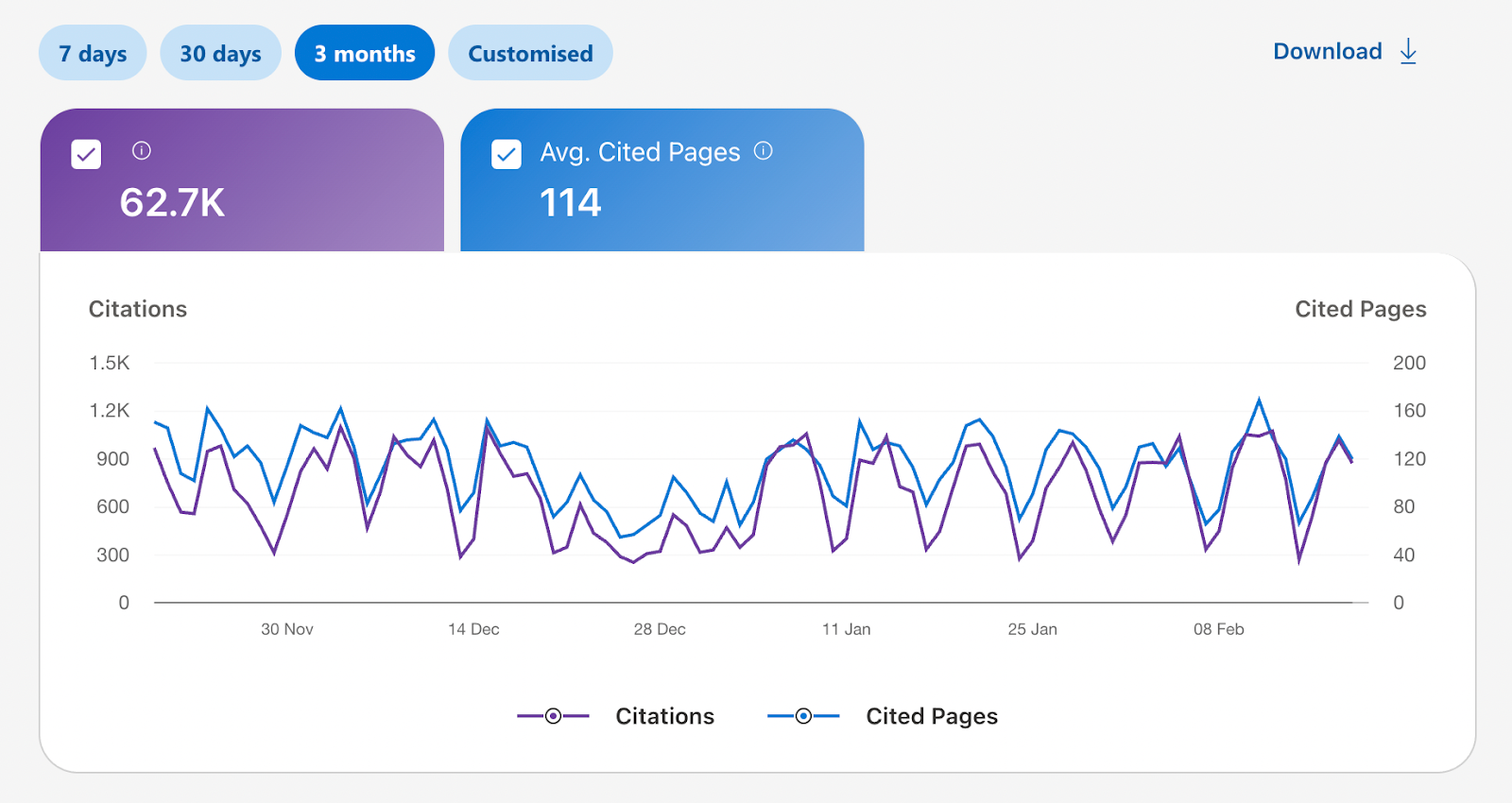
One of our clients runs a job board built entirely around four-day workweek roles. They are currently pulling in 21,600 citations a month on Bing Copilot and their AI partners — 62,700 in total over the last 90 days.
Here is what we did to make that happen.
What We'll Cover
Four-day workweek jobs are a growing conversation, and increasingly that conversation is happening inside AI platforms. This case study covers how we helped a niche job board show up consistently in that conversation on Bing Copilot and their AI partners… from the content topics we targeted to how we made their existing pages work harder for citations.
What We Did
Building Visibility on Bing as an LLM Source Layer
Early on, we noticed the pages earning the most citations were consistently the same pages doing well on Bing. That makes sense once you understand that Bing feeds directly into multiple LLMs, including ChatGPT and Bing Copilot.
Strong visibility there does not just help you in Bing search… it carries over into how often your content gets cited across AI platforms in general.
So we started there.
Writing Content That Is Easy for LLMs to Cite
When someone asks an AI assistant a question, it pulls from pages that give a clear, direct, evidence-based answer. That is the standard we held every piece of content to for this client.
If someone was reading about salaries, they’ll see actual numbers. If they were reading about a company, they’ll have an honest picture — the kind of thing that actually helps someone decide whether to apply. We also kept their sections tight and focused, used clear headings, and added FAQs and key takeaways throughout.
A Content Strategy Built Around What the Audience Was Already Asking
The client's audience is tech professionals who care about work-life balance. They are researching roles, sizing up companies, and preparing for interviews. We built the content calendar around those exact moments.
- Salary content was a big one. These are questions tech workers search for all the time, and AI assistants field them constantly too. Good salary pages put the client in those conversations.
- Company reviews gave job seekers the honest, practical insight they were looking for when weighing up a potential employer — structured clearly enough that AI systems could surface the right parts when relevant.
- Interview question content covered the high-intent end of the funnel — the stuff people are actively searching for when they are in the middle of applying somewhere. Exactly the kind of content AI assistants get asked about during a job search.
Making Programmatic Pages Work for Citations
Job boards run on programmatic pages, and this client had a lot of them. The problem was those pages were not structured in a way that made them easy for LLMs to read and pull from. We worked with the client on how to present their listing information more clearly and consistently — so that AI systems could actually extract something useful from each page. The content was already there. It just needed to be set up the right way. Once it was, pages that were already getting traffic started contributing meaningfully to citation volume.
Link Building for Credibility
We focused on getting links from publications and communities in the flexible work and tech hiring space. The SEO value is there, but the bigger picture here is that these links tell LLMs this is a recognized, credible source in its niche. That recognition is part of what makes an AI system decide a page is worth citing in the first place.
Keeping Content Current
Job market content has a shorter shelf life than most. Salaries shift, companies change, hiring trends move. We kept a regular update rhythm on the client's top pages throughout the engagement. That ongoing freshness is a big reason the citation numbers held steady month over month rather than fading after an initial bump.
Results
All data is pulled directly from Bing's AI Performance Dashboard, which tracks citations from Bing Copilot and its AI partner network.
- Last 30 days: 21,600 citations
- Last 90 days: 62,700 citations
Key Takeaways
- Bing and AI citations are more connected than most people think. The pages doing well on Bing were the same ones earning the most citations. Your visibility there has a direct impact on how often you show up in AI-generated responses.
- Useful content gets cited. Vague content does not. Real figures, honest breakdowns, practical detail — the more genuinely useful a page is, the more likely an LLM is to reference it.
- Programmatic pages are an underused opportunity. Most job boards are sitting on a lot of high-volume pages that could be doing much more. Structure them well and they become some of your strongest citation assets.
- Know what your audience is asking AI and build around that. Salaries, company reviews, interview prep — these are the conversations already happening. Being the source AI systems pull from in those moments is a real competitive advantage.
- Freshness keeps citations compounding. In a fast-moving category like jobs, keeping content current is not optional. It is what separates consistent long-term visibility from a brief moment in the spotlight.
Want Results Like These for Your Business?
At Embarque, we help companies build visibility where their audiences are already searching — across Bing Copilot, ChatGPT, Perplexity, and beyond. If you want a GEO strategy that delivers real, measurable results, let's talk.




