





Overview
Embarque is a revenue driven SEO agency. That sounds straightforward, but it comes with a pressure we cannot ignore. If we tell clients SEO should drive pipeline, our own site needs to prove it.
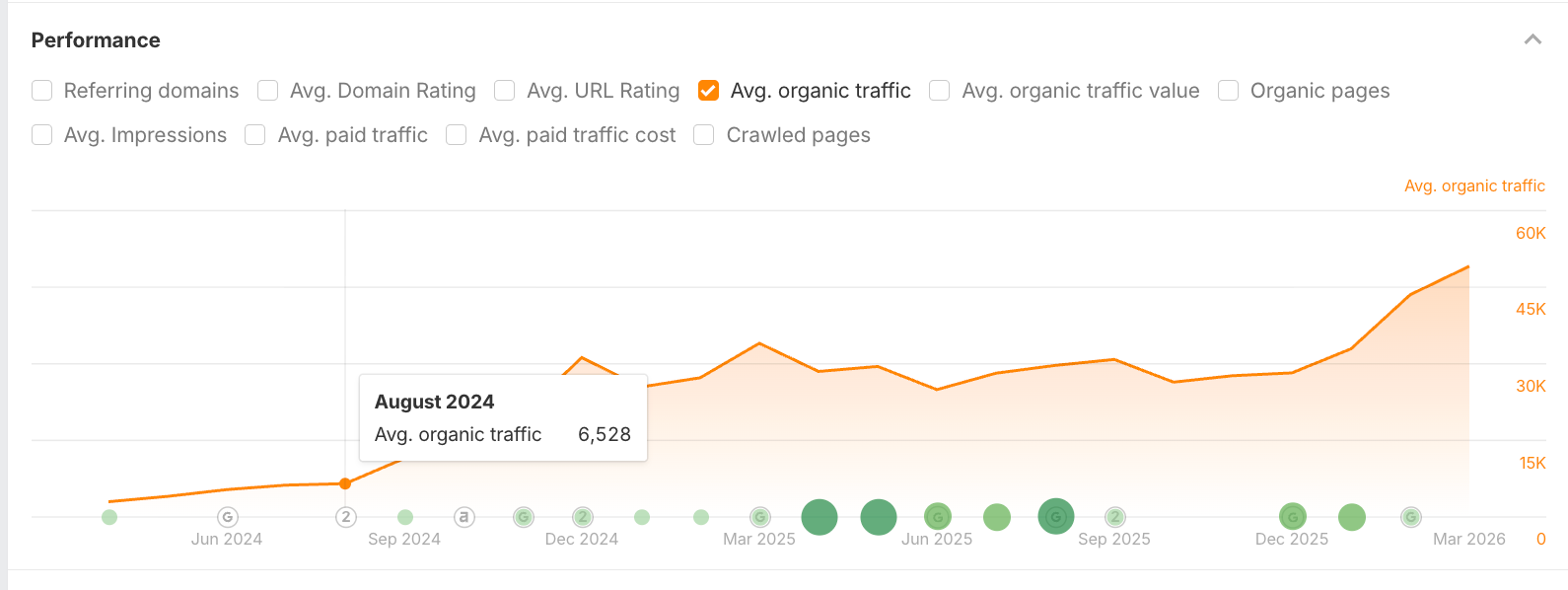
Back in August 2024, our organic traffic was sitting around 6,528 sessions a month. It was not bad, but it was not reliable either. Some pages performed, others did not, and growth felt tied to bursts of effort instead of a system we could count on.
So we treated our website like an actual SEO project. We set quarterly goals, picked a few strategies we believed would compound, and stayed consistent with execution and updates.
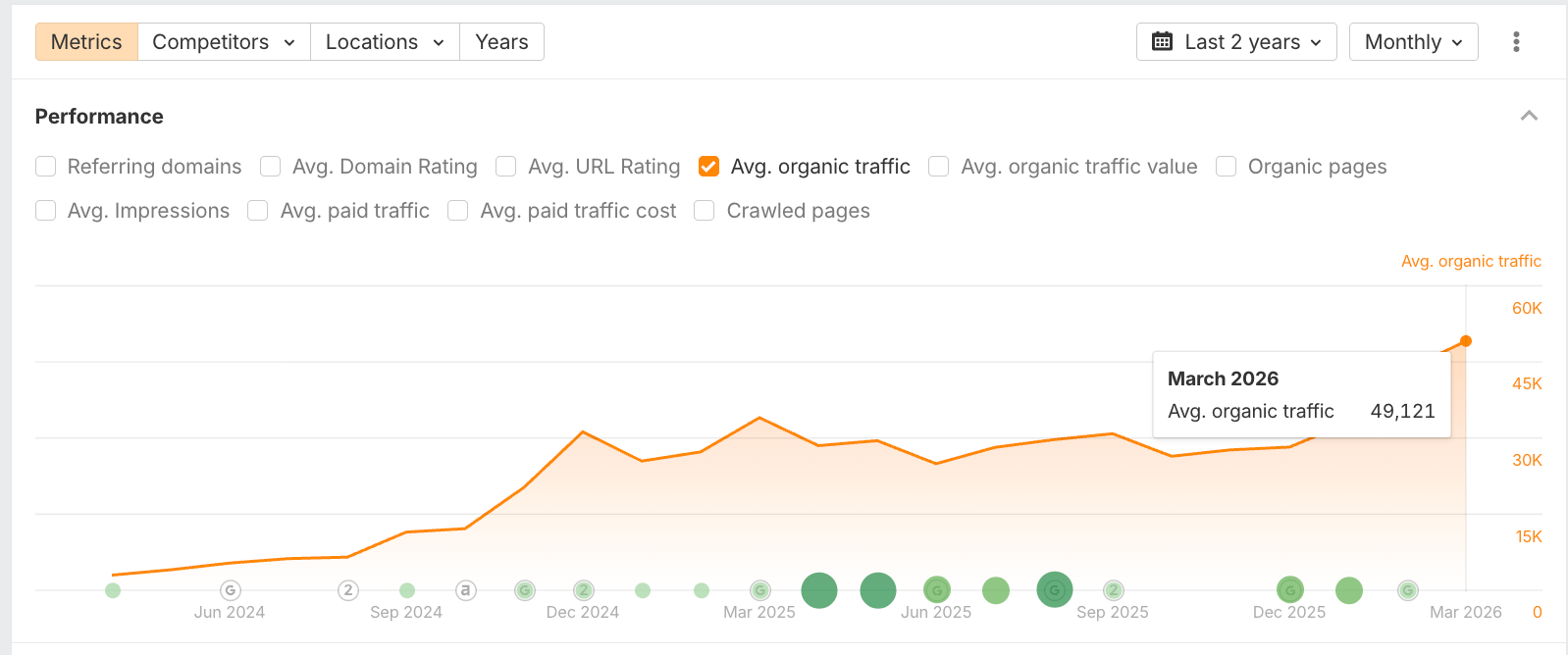
By March 2026, organic traffic reached 49,121 sessions per month. More importantly, a large share of that traffic now lands on high intent pages that lead to discovery calls throughout the week.
What We’ll Cover
In this case study, you will see the strategy we used to make that shift, from micro tools that build topical authority to commercial content campaigns, targeted link building, and a steady cadence of content updates that pushed pages from positions five to twenty into the top results.
What we did
We ran a few core initiatives in parallel and reviewed them every quarter to keep the work focused on commercial outcomes.
Programmatic SEO micro tools
We built a group of free micro tools that match problems our audience already searches for. The goal was to capture long tail demand, expand topical coverage, and create more entry points into the site.
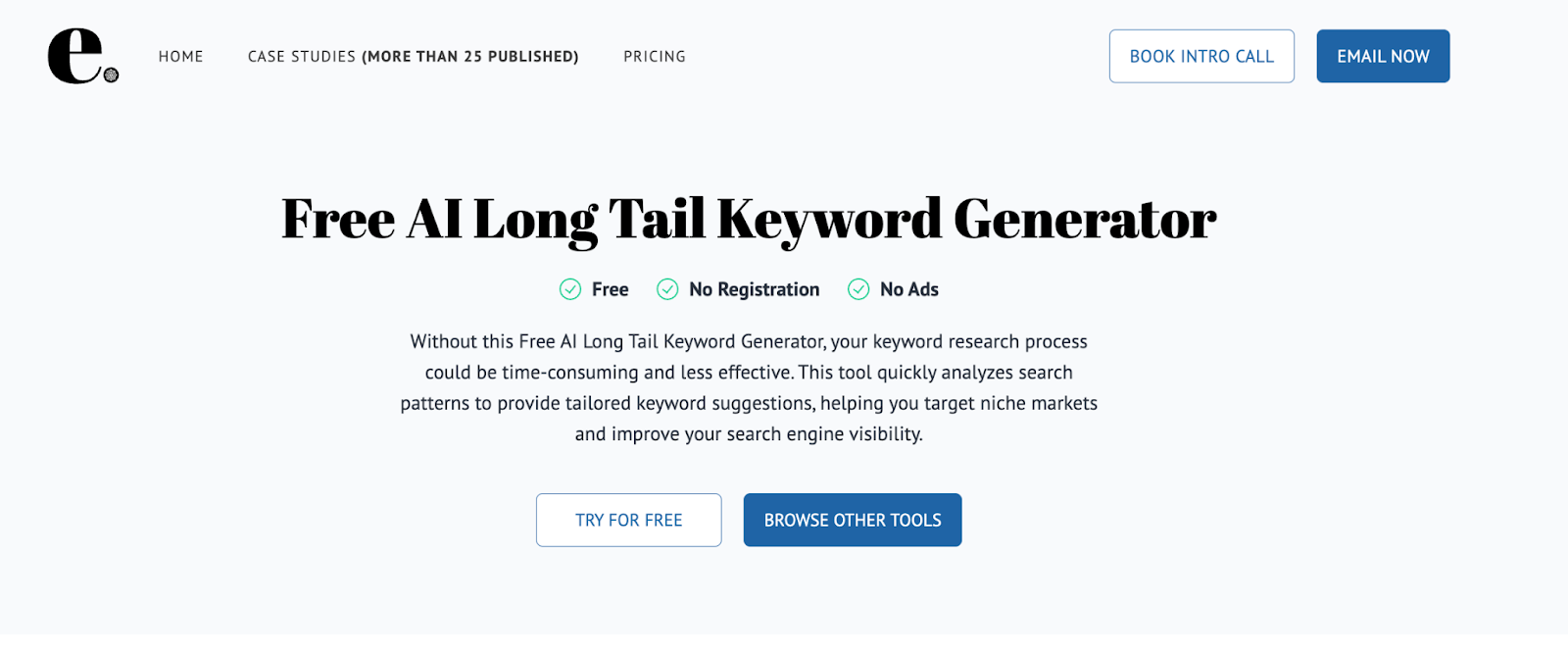
Examples include a free long tail keyword generator and a free AI text simplifier, along with other lightweight tools designed for SEO and content workflows.
Here is why this worked:
- People find the tools through search
- They use the tools and get real value
- They leave knowing who Embarque is
This creates warm entry points into the site without any outreach or paid spend. It also builds topical authority, which makes it easier for our other pages to rank.
SEO content campaigns
We plan content in 90-day cycles. Each cycle has a specific goal tied to traffic or commercial visibility. This keeps the work focused and easy to measure.
Most of the content effort went into two areas.
Area 1: Commercial pages targeting high-intent searches
These are searches people run when they are already looking for an agency. Examples:
- Best SEO agencies
- Organic SEO agency
- White label SEO agency
People searching these terms are close to making a decision. Showing up here means you are in the conversation at the right moment.
Area 2: Content for people earlier in the process
Some people are not ready to hire yet. They are still figuring out what they need. We created content for those searches too. Examples:
- How to find an SEO agency
- How to choose the right SEO partner
- What to look for before hiring an agency
This content builds trust earlier and leads people toward our commercial pages naturally.
Area 3: Glossaries
We built out a library of glossary pages covering terms across SEO, GEO, and SaaS. These are definition-style pages that explain concepts like generative engine optimization, topical authority, programmatic SEO, and dozens of others.
The traffic these pages bring in is minimal on its own. That is not the point.
Glossary pages serve a different purpose. They show search engines that we have deep, comprehensive coverage of our subject area. That kind of breadth signals authority, and authority is what helps commercial pages rank faster and hold their positions longer.
Link building focused on pages that already work
Most sites spread links across many pages evenly. We did the opposite.
We concentrated links on pages that were already driving the right traffic. Specifically:
- Key commercial pages
- Listicles with strong conversion rates
- Supporting content around those pages
If a page is already converting, more authority helps it rank higher and convert more. It is a more reliable approach than building links to pages that have not proven anything yet.
Offsite signals built consistently across YouTube, Reddit, and beyond
Ranking well is not just about what is on your site. It is also about how much of the broader internet recognises you as a credible source in your space.
We invested heavily in building that recognition outside of the site itself. This included:
- A YouTube channel covering SEO and GEO topics in depth
- Active participation in Reddit threads where our audience asks questions
- Other platform activity that puts Embarque in front of relevant audiences consistently
None of this replaces on-site SEO. But it reinforces it. When the same brand shows up in search results, on YouTube, and in community discussions, it builds a level of familiarity and trust that a website alone cannot create.
Continuous content updates and optimization
We did not just publish new content. We regularly updated existing content too.
We focused on pages ranking in positions 5 to 20. These pages already get some traffic. They just need improvements to break into the top results.
Our update process looks at four things:
- What keywords is the page already showing up for but not fully targeting
- Which sections are outdated or too short
- Where the content does not match what the searcher actually wants
- Which internal links could be stronger
Updating content also helps with AI search tools like ChatGPT and Perplexity. These tools tend to pull from content that is current, detailed, and well-structured.
Results
Organic traffic increased from 6,528 monthly sessions in August 2024…
… to 49,121 monthly sessions by March 2026.
The quality of traffic improved alongside the volume. A large portion of visitors now land on commercial pages that generate discovery call bookings throughout the week, which made SEO a reliable inbound channel for us.
Add screenshot: Organic traffic growth
Add screenshot: Top landing pages driving bookings
Key takeaways
- Free tools build authority and trust at the same time. They bring in consistent search traffic and give people a reason to engage with your brand before you pitch anything.
- Quarterly content cycles keep work tied to real goals. Without a clear focus per cycle, it is easy to publish a lot and move nothing.
- Commercial pages need dedicated attention. People searching "best SEO agency" are close to buying. Ranking for those terms and supporting those pages with links pays off quickly.
- Build links behind pages that already convert. Concentrating link building on proven pages amplifies what is already working.
- Updating existing content is one of the highest ROI activities available. Pages sitting in positions 5 to 20 often just need better coverage and a refresh. A full rewrite is rarely necessary.
- Glossaries build the topical foundation that helps everything else rank. They do not drive much direct traffic, but they signal depth and expertise across your subject area.
- Consistent offsite presence compounds over time. YouTube, Reddit, and community activity build brand recognition that feeds back into search performance in ways that are hard to measure but very real.
Next steps
This is the same approach we use for client projects.
If you want SEO to become a consistent source of qualified leads, we can help you build and execute a strategy tailored to your goals.