





Over the last 90 days, one of our clients in the AI audio editing space earned 271,200 citations on Bing Copilot and their AI partners. In the last 30 days alone, that number sits at 91,800 — and the citation volume has been holding steady month over month.
Here is exactly what we did to get there.
What We'll Cover
This case study breaks down the content and GEO strategies that drove 271,000 AI citations for an AI podcast editing SaaS over the last 90 days. You will see how we structured content so LLMs could easily cite it, built out use-case pages that became some of the strongest citation performers, and put together a commercial content strategy that keeps the brand showing up consistently across AI platforms.
What We Did
Optimizing for Bing as an LLM Source Layer
Most SEO strategies treat Bing as an afterthought. That is a mistake, especially now. Bing is one of the primary data sources that LLMs like ChatGPT and Bing Copilot pull from when generating responses… meaning your Bing visibility directly influences how often your content gets cited across multiple AI platforms, not just Bing search itself.
For this client, we made sure they were actually set up to take advantage of that. Clean indexation, no crawlability issues, key pages properly surfaced. The kind of foundational work that does not sound exciting but makes everything else perform better.
Writing Content That LLMs Can Actually Cite
There is a lot of content on the internet. What gets cited by LLMs is the content that makes it easy to extract a clear, specific answer. So that is how we approached every piece of content we created for this client.
A few things that made the difference here.
- First, we made sure the content was evidence-based. For listicles and tool comparisons, that meant including the detail that people and AI systems actually want to see — pricing, pros and cons, use cases, how the product works in practice. Thin content does not get cited. Substantive content does.
- Second, we kept the structure clean. Each section covered one idea. This makes it easy for an LLM to pull a specific point without having to wade through a block of loosely related information. The technical term for this is chunking, and it genuinely moves the needle.
- Third, we kept the language simple and natural. No jargon, no unnecessary complexity. Content that reads clearly is content both humans and AI systems can digest quickly, and that makes it far more likely to end up in an AI-generated response.
Building Individual Landing Pages for Each Use Case
The client's product does a lot of distinct things. It removes background noise, strips out filler words, cuts dead air, cleans up mouth sounds, and more. Instead of covering all of that on one page, we mapped out each use case and gave it its own dedicated landing page. These ended up being some of the highest-performing pages for citations across the entire strategy.
The reason they work is simple. When someone asks an AI assistant something like "how do I remove dead air from my podcast," the AI wants a page that answers that one question directly and completely. A dedicated use-case page does exactly that.
We also created blog versions of these — how-to posts covering the same topics in a more editorial format — which gave us another layer of citable content around each use case.
Commercial Content That Targets the Right Buyers
We built out product listicles, competitor comparisons, and alternative roundups aimed at the queries this client's target audience was already searching and asking AI assistants.
This type of content performs well for citations because it is genuinely useful in the moments when someone is evaluating tools. It also tends to travel across platforms — content that gets cited in Bing Copilot often shows up in ChatGPT and Perplexity responses too, because the same signals that drive citability on one platform tend to apply across others.
Link Building to Signal Credibility to LLMs
For LLMs, a backlink from a credible, relevant source is a signal that your brand is real and recognized within its space. We focused on earning links from podcasting publications, audio tool roundups, and creator-focused media.
Beyond the traditional SEO value, this directly increases the likelihood that AI systems treat the client as a trustworthy, citable source when relevant topics come up.
Keeping Content Updated Consistently
LLMs factor in recency. A page that has not been touched in months can lose citation share to a fresher page covering the same topic, even if the older page is technically better.
So we put a regular update cadence in place — going back to refresh stats, update comparisons, and make sure nothing was sitting stale. This is a big reason the citation numbers have been holding steady month over month rather than dropping off.
Results
All data is pulled directly from Bing's AI Performance Dashboard, which tracks citations from Bing Copilot and its AI partner network.
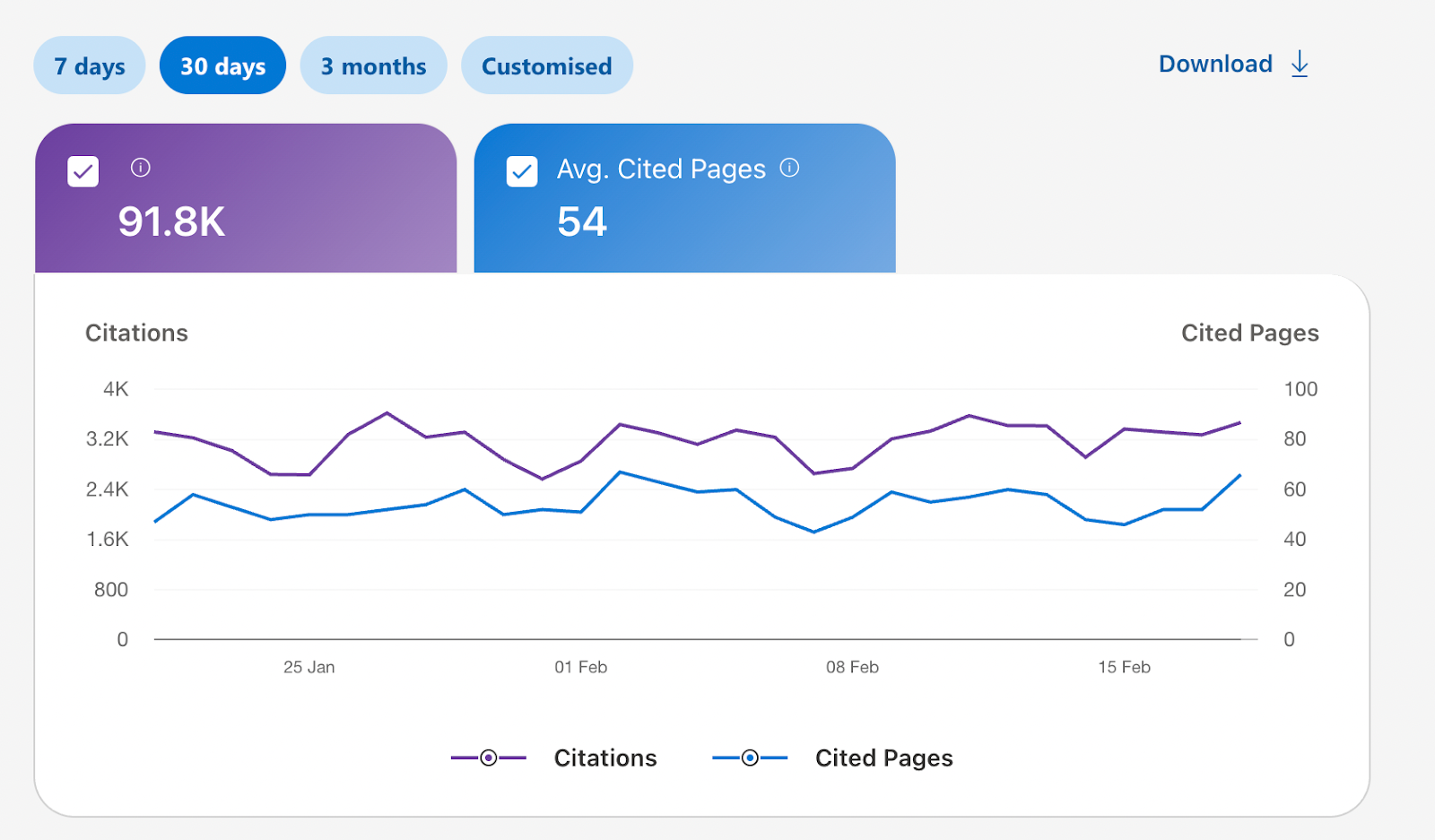
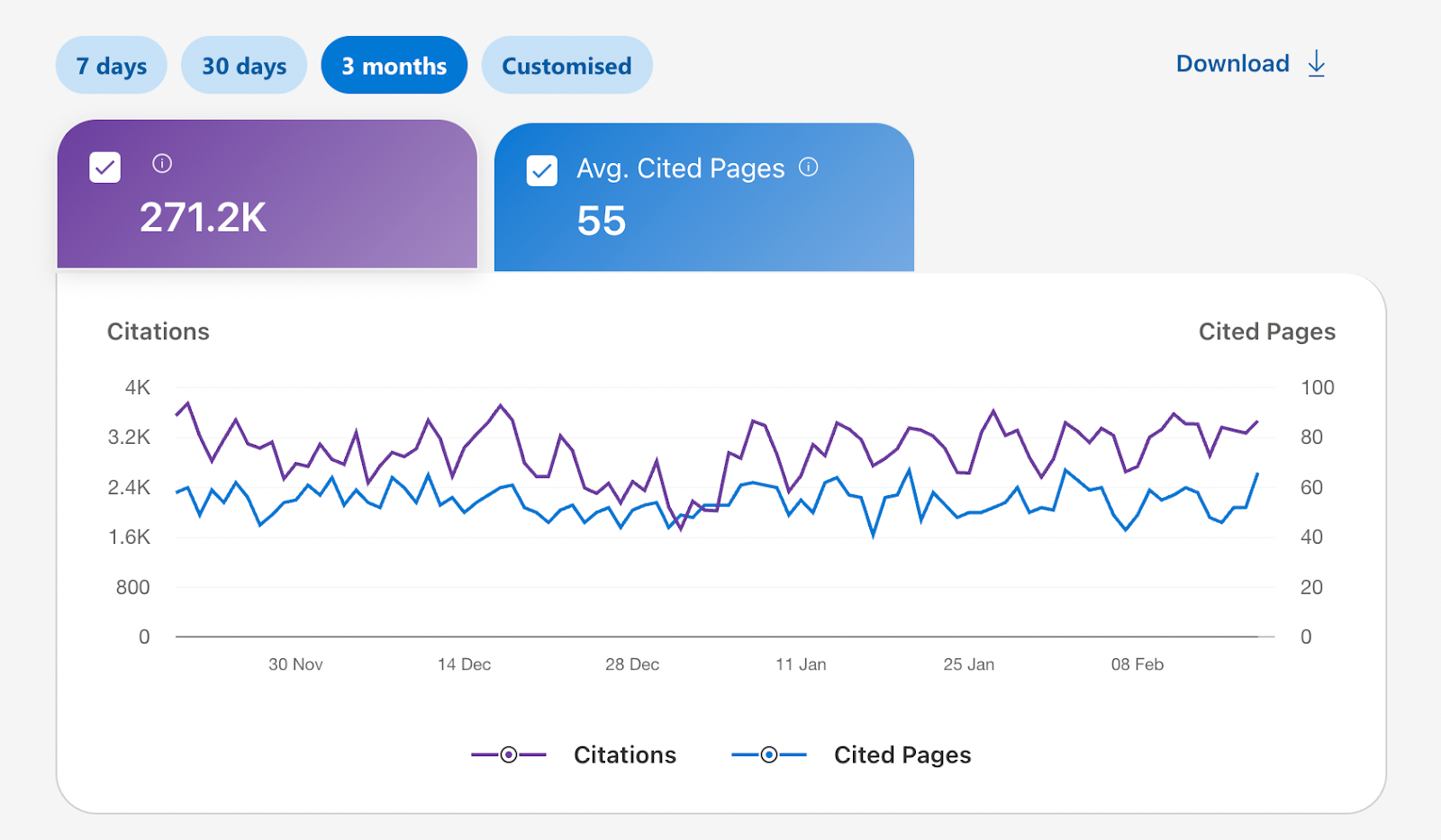
The average cited pages per day is identical across both windows, which tells you this is not a spike — it is consistent, compounding visibility month over month.
Key Takeaways
Write content LLMs can extract from easily. One idea per section, plain language, and real substantive detail all make content significantly more citable. If an LLM cannot pull a clear answer from your page, it will find one that it can.
Give each product use case its own page. Dedicated landing pages that answer one specific question completely are among the strongest citation assets you can build. If your product does multiple things, each one deserves its own page.
Commercial content gets you into AI-powered buying conversations. Listicles, competitor comparisons, and alternative roundups are what AI assistants pull from when users are evaluating tools. Without that content, you are largely absent from those moments.
Links tell AI systems your brand is legitimate. Backlinks from credible, relevant sources help LLMs recognize that your brand belongs in the conversation. That function has not gone away — it has just taken on a broader role in GEO.
Freshness keeps citations compounding over time. Updating existing content regularly is just as important as creating new content. Pages that go stale lose citation share, and a consistent update cadence is what prevents that from happening.
Want Results Like These for Your SaaS?
At Embarque, we help B2B SaaS companies build visibility where their buyers are searching — including Bing Copilot, ChatGPT, Perplexity, and beyond. If you want a GEO strategy built around real data and measurable outcomes, let's talk.